
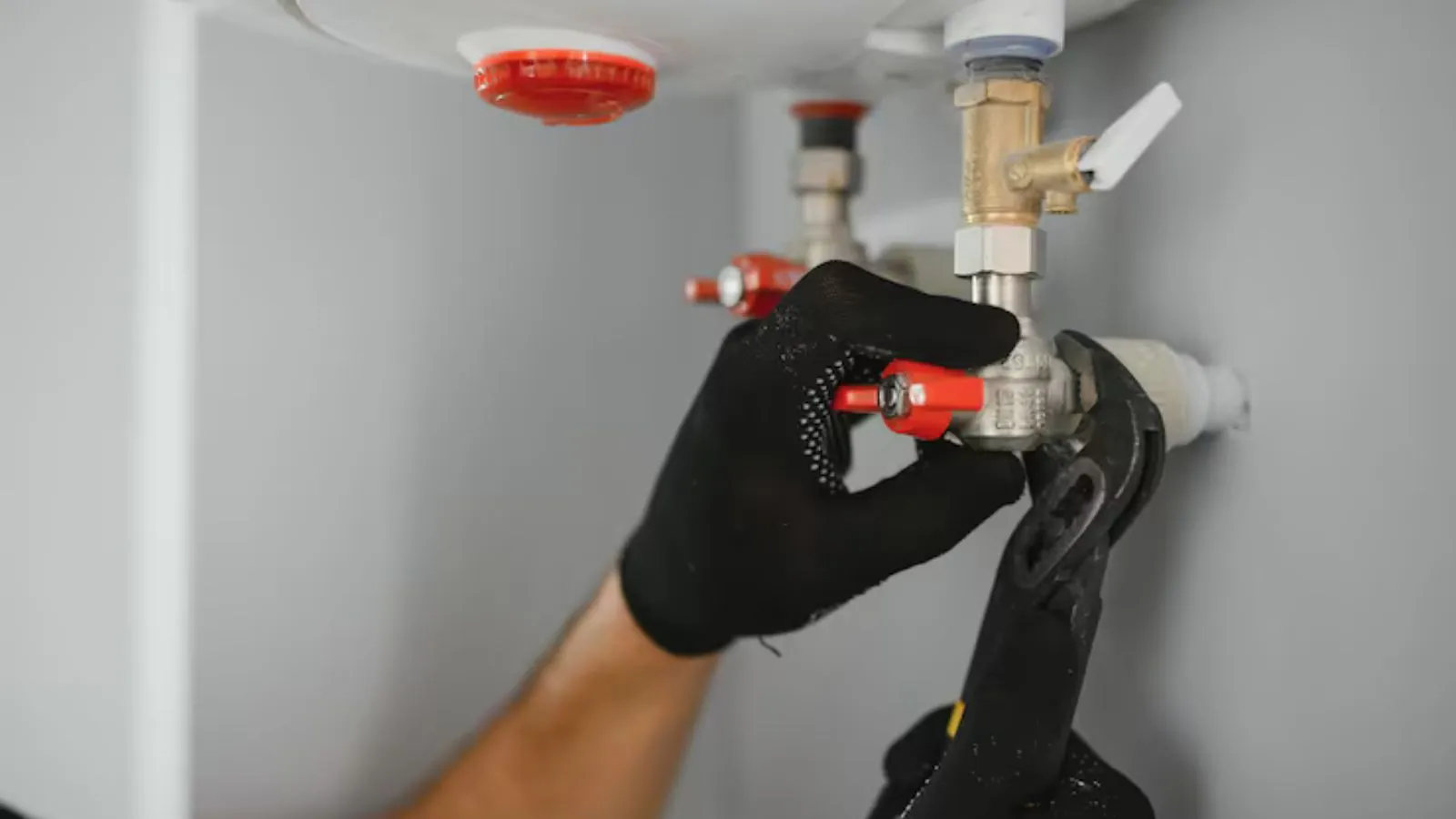
A leaking water heater: the first five minutes
A tank that fails can release dozens of gallons, and a supply line that splits keeps pushing water until it is closed. The water is also hot, which adds a scald risk to the flood. Act in this order and keep your hands out of the water.
Cut the energy.
Switch off the breaker for an electric heater, or turn the gas control to off for a gas unit. Do this only from a dry spot.
Close the cold inlet.
The shut-off valve on the pipe feeding the tank stops new water. If it will not close, shut the main.
Stay clear of hot water.
Standing water near the tank can be hot enough to scald. Let it cool before you walk through it.
Photograph the unit.
Capture the tank label, the leak point and the wet area before anything is moved.
Gas and electric hazards
If you smell gas, leave the house and call the gas utility or 911 from outside. Do not flip switches. For an electric heater sitting in water, do not touch the unit or the panel while standing in water.
Why tank failures flood more than you expect
A heater tank holds roughly forty to fifty gallons, and a failing tank releases that plus whatever the supply continues to push. The water spreads across a basement floor, wicks into the base of walls and runs under finished rooms. Most heaters sit in a basement corner, a utility closet or a crawl space, so the water often goes unseen.
Rust at the base, a damp floor under the tank or a pooled puddle that returns after wiping are early signs. Anode rods wear out, sediment cooks the lining, and fittings corrode. A heater that has run for many years is a candidate for failure.
Leak sources and what each one means
| Where it leaks. | Likely cause. | Typical response. |
|---|---|---|
| Bottom of the tank. | Tank lining failed. | Replace the heater, then dry the floor and walls. |
| Pressure relief valve. | Valve opened or is faulty. | Plumber replaces the valve, check for hidden wet areas. |
| Inlet or outlet fittings. | Loose or corroded connection. | Plumber repairs the fitting, we dry the area. |
| Drain valve. | Worn seal or sediment. | Plumber services the valve, dry any wet flooring. |
Cleanup and drying after the tank fails
Pump and extract.
Standing water is removed with pumps and wet vacuums, as described under water extraction.
Check what the water reached.
Moisture meters scan the base of walls, flooring and any stored items. Drywall near the floor is often wet.
Remove damaged materials.
Wet baseboards, insulation and lower drywall are cut out if they cannot be dried in place.
Dry and verify.
Air movers and dehumidifiers run, and readings decide when the area is dry enough to rebuild.
If the heater sits in a finished basement, the basement cleanup page explains carpet, paneling and storage. If the leak spread to a nearby wall, see wall and drywall repair.
Plumbing permits and who does what
Replacing a water heater is plumbing work. Baltimore County says a plumbing permit is required for all plumbing and gasfitting work and that only a county-licensed plumber or gasfitter contractor can apply for it. We do not replace tanks. Your plumber handles the heater and the permit, and we handle the water damage.
Ask your plumber to coordinate timing, since drying equipment can be set while the new heater is installed. A well-planned job avoids moving the equipment twice.
Heater flooded the floor?
Call the 24/7 line once the water is shut off. We handle the extraction and drying.
What affects cost and coverage
- How much water spilled and how long it ran.
- Whether it reached finished walls, carpet or stored items.
- Hard floor or carpet, since carpet adds pad removal.
- Drying days and the equipment used.
- Rebuild scope after readings pass.
The Maryland Insurance Administration says sudden and accidental water damage is generally covered, though the failed appliance itself usually is not. Slow leaks that went unnoticed are treated differently. Read your policy and ask your insurer. Call the line for a number tied to your house.
Common questions
Yes. The line is answered 24/7. Tell the dispatcher the heater is leaking and that you have closed the inlet valve, and a same-day response will be planned when a crew is available.
Not if the tank is actively failing and hot water is spilling. Close the inlet valve and cut power or gas first. A plumber should drain and replace the unit.
Sudden and accidental water damage is generally covered, but the heater itself usually is not. Gradual leaks are treated differently. Check your policy and ask your insurer before deciding.
Often, if the water was clean and short-lived. A technician checks the lower wall with a meter and removes only what cannot reach a dry standard.
Look for rust at the base, moisture on the floor, rumbling noises and rusty hot water. A plumber can inspect it before it fails.