
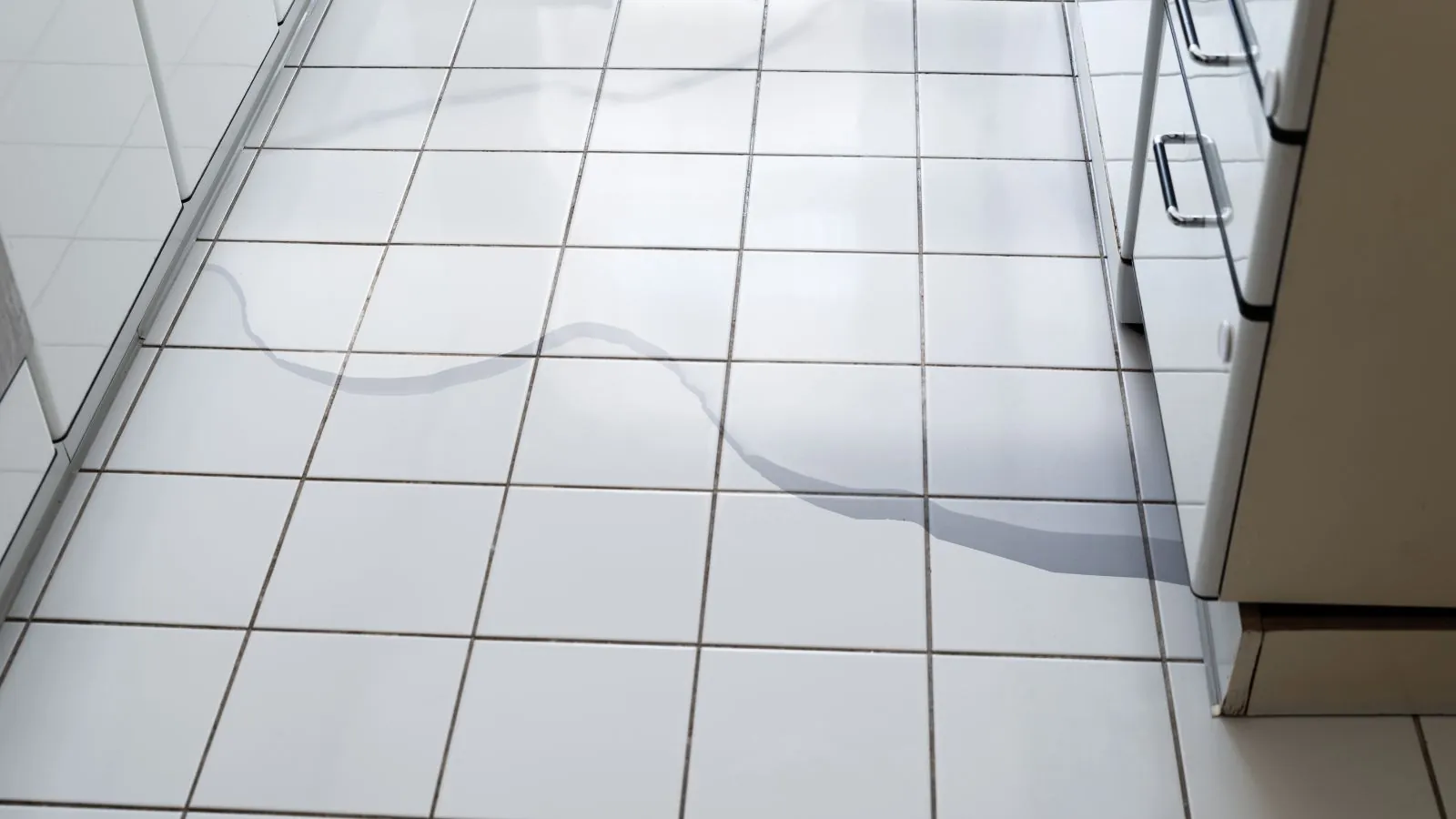
Where kitchen water hides
A kitchen packs plumbing into a small space. Sink lines, the dishwasher, the refrigerator ice maker and the disposal all sit behind cabinet doors. A drip you cannot see can soak the cabinet floor, the toe kick and the subfloor beneath.
| Source. | Where water goes. | What is often wet. |
|---|---|---|
| Sink supply or drain. | Cabinet base, toe kick. | Particleboard, subfloor. |
| Dishwasher. | Under the machine, beside cabinets. | Flooring edge, adjacent cabinet. |
| Refrigerator line. | Behind and under the unit. | Flooring, wall base. |
| Overhead leak. | Ceiling, then counters. | Drywall, light fixtures. |
Cabinets: save or replace
Solid wood cabinets with a good finish can often be dried. Particleboard and MDF swell when wet and do not return to shape. The base of a cabinet is the first to fail, and a swollen base means the box has to go even if the doors look fine.
- Solid wood: dry in place if readings allow.
- Plywood: may dry, check for delamination.
- Particleboard or MDF: swells, usually replaced.
- Laminate countertops: lift if water got under the edge.
Flooring in the kitchen
Tile is easiest, since the tile and grout survive and the subfloor is checked. Vinyl can trap water underneath. Hardwood may cup. Laminate swells at the seams. See the hardwood page for cupping, and the appliance leak page for machine failures.
Stop the water.
Close the angle stop under the sink or the main.
Empty and open.
Cabinet contents are removed and toe kicks pulled.
Extract and scan.
Meters map the floor and wall.
Dry and decide.
Equipment runs until readings pass, then the cabinet decision is made. See structural drying.
The slow kitchen leak
Many kitchen leaks are slow. A supply line drips for weeks inside a cabinet, the floor stays damp and nobody sees it. The first clue is often a smell, a soft spot near the sink or a cabinet door that no longer closes square.
If you find a slow leak, empty the cabinet base, dry the surface and look at the underside of the countertop. Check the wall behind the sink with your hand. A damp wall or a swollen cabinet base means the water has traveled, and a moisture meter can tell you how far.
Water that has sat for a long time may already support mold. The EPA advises drying wet materials within 24 to 48 hours, and a slow leak has usually passed that window. In that case a technician will check the base of the wall and the underside of the cabinet before deciding what to open.
Countertops, backsplashes and walls
Stone and solid-surface counters are not harmed by water, but the substrate under laminate counters swells at the edges. Tile backsplashes can hide water behind the grout line. When the wall behind the sink reads wet, the drywall may need to be cut and dried, which the wall and drywall page explains.
Ask your contractor to wait until the readings are dry before closing up a wall or installing new cabinets. New finishes over a damp base trap the moisture, and the problem comes back.
The ANSI/IICRC S500 standard is the industry reference for judging cabinets, flooring and walls after a leak. It is why a technician checks readings before deciding what to keep.
Safety steps before you start in a wet kitchen
Do not touch an appliance standing in water, and cut power at the panel from a dry spot. Keep children and pets out of the room, wear shoes with grip on wet floors and do not use a gas stove or oven if you smell gas or the controls got wet.
Kitchen leak?
Call the 24/7 line before the cabinets swell.
Planning a kitchen around the drying
Kitchens are in daily use, so people want to know how long they will be without one. Drying equipment is loud and takes space, and cabinets may be partly open for several days. Plan meals, move the refrigerator contents and tell us which appliances must stay in service.
Once readings pass, rebuilding is straightforward. The work is done in order: subfloor, cabinet bases, flooring, counters, then paint. Skipping the readings to save a few days is how a kitchen ends up redone.
Cost and insurance
Cost depends on cabinet count, flooring and drying days. Sudden, accidental discharge is generally covered for the damage, though not for the failed part itself. Read your policy and ask your insurer. Call the line for a real number.
Common questions
Yes. The line is answered 24/7, and a same-day response is planned when a crew is available.
Solid wood often can. Particleboard that has swollen usually has to be replaced.
Yes, if water is spreading. Close the valve and call.
Yes. We dry and document, then hand off the rebuild.
Sudden leaks are often covered for the damage. Ask your insurer.