
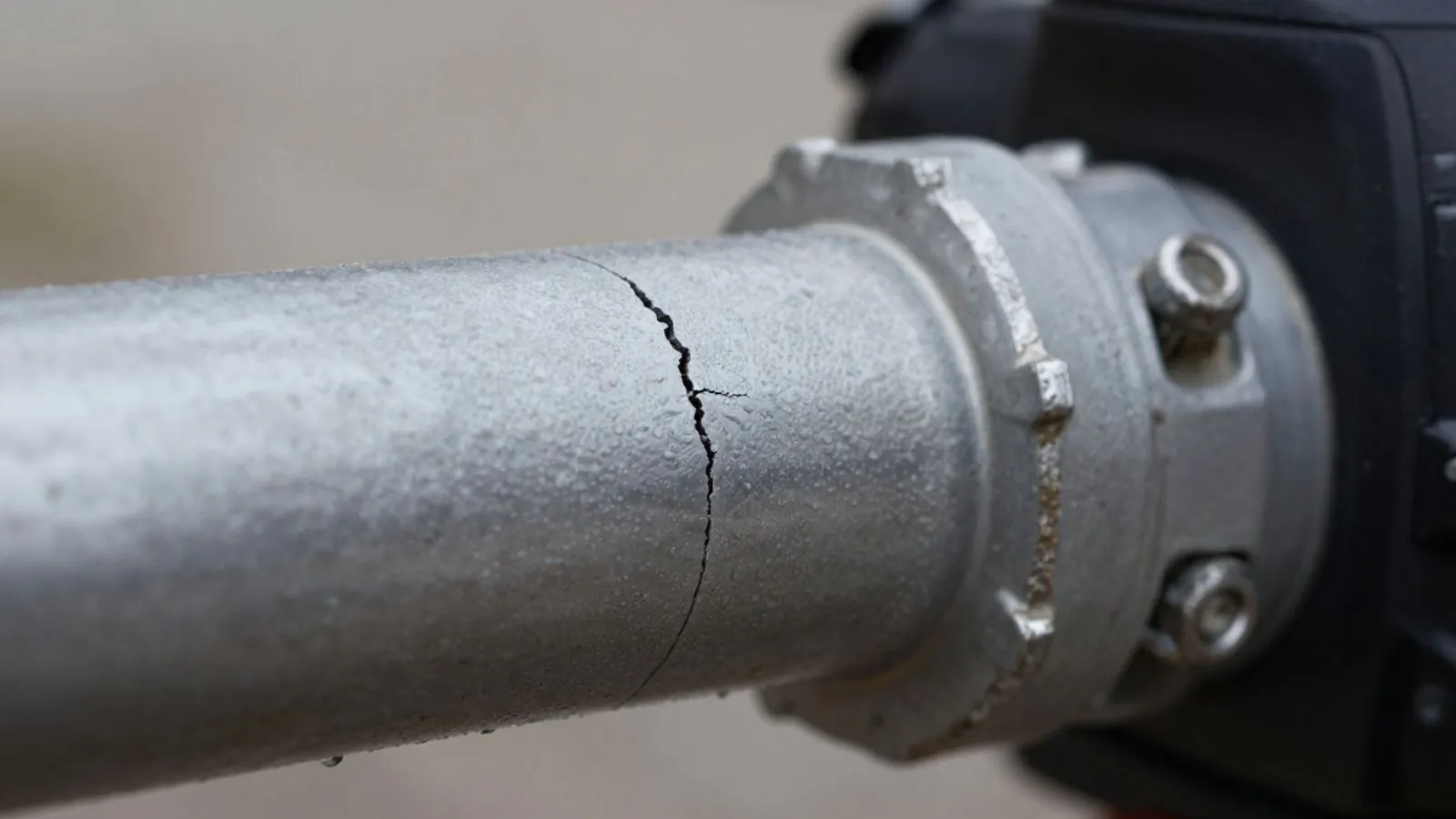
When a frozen pipe becomes a water emergency
Water expands when it freezes, and the ice can split a pipe along its length. A frozen pipe often shows nothing until it thaws, because the ice plugs the break. When the temperature rises or the line warms, the plug melts and pressurized water pours out of the split.
That means the flood can start hours after the cold ended, often when no one is looking at the wall. People find it as a stain on a ceiling, a wet basement floor or a sound of running water in a closed wall.
Treat these as signs of a split pipe after a freeze:
- A faucet that produces no water or only a trickle during freezing weather.
- Frost on a pipe or a bulge in the pipe.
- The sound of running water when everything is off.
- A damp patch on a wall, ceiling or floor under a pipe run.
Cold-weather facts that matter locally
The Maryland Manual reports that the freeze-free period in the state averages 185 days, and the statewide winter average is 34.1 degrees. We do not have a Catonsville-specific count of freezing nights, and we will not make one up. What matters for your pipes is where they run, not the yearly average.
Pipes in exterior walls, unheated garages, crawl spaces and basement corners are the ones at risk. A short freeze of a few hours after a long mild stretch can catch a house whose owner has not covered vents or disconnected hoses. Check these places before cold weather, and see the crawl space page if your pipes run under the floor.
What to do if a pipe is frozen but has not split
Open the faucet.
Leave the tap on so water can flow as the ice melts. Moving water helps prevent pressure from building behind the plug.
Warm the area gently.
A hair dryer on low or a warm towel can help. Never use an open flame, a torch or a space heater near the pipe.
Know your shut-off.
Locate the main valve before you start. If the pipe splits, turn the main off immediately.
Call a plumber if it will not thaw.
A pipe you cannot reach or that stays frozen needs a professional. Do not keep heating it blindly.
What cleanup looks like after a thaw flood
The water from a split pipe is usually clean supply water, but a thaw flood often goes unnoticed for hours. By the time it is found, it has saturated insulation, drywall and the floor below. Crews extract standing water first, then open wall cavities and run air movers and dehumidifiers.
The wall where a pipe froze is often an exterior wall with insulation. Wet insulation holds water against the framing and is usually removed. The wall and drywall page explains how cuts, drying and patching work, and structural drying explains the readings that tell you when it is finished.
Do not heat the house to dry it out
Raising the thermostat can feel like the right move, but wet insulation and sealed walls need airflow and dehumidification, not just warmth. Heat can also push moisture deeper before it escapes. Let the readings guide the equipment.
Why splits show up in different places
| Pipe location. | Why it freezes. | Where the water goes. |
|---|---|---|
| Exterior wall. | Cold from outside reaches the pipe through thin insulation. | Down the wall cavity to the floor and into the room below. |
| Unheated garage or crawl space. | No heat source and drafts at vents. | Into the crawl space or onto a slab and under adjacent rooms. |
| Attic or roof line. | Cold air flows over uninsulated runs. | Through the ceiling below, often across several rooms. |
| Outdoor spigot line. | A hose left connected traps water. | Along the interior wall behind the spigot. |
If the water came through a ceiling, the ceiling water damage page covers stains, sagging and repair. Frozen lines in the attic often show up there first.
Water from a thawed pipe?
Call the 24/7 line. Cold snaps are the busiest nights for pipe calls, so call as soon as you shut off the water.
Insurance and cost for frozen pipe damage
The Maryland Insurance Administration says a suddenly burst pipe that floods floors is generally covered for the water damage, though not for repairing or replacing the pipe. Frozen pipe claims turn on whether the house was kept heated and maintained, so read your policy and ask your insurer.
- How long water ran after the thaw.
- Whether the water reached insulation, drywall and flooring.
- Drying days and equipment.
- Rebuild scope for walls and floors.
We explain the scope and the price before work starts. For a number tied to your house, call the 24/7 line and describe the loss.
Common questions
Yes. The line is answered 24/7, including holiday weekends, and cold snaps are when calls come at odd hours. If a pipe has split or thawed and water is running, shut off the main and call so a same-day response can be planned when a crew is available.
A gentle warm towel or hair dryer on low is generally safe on an exposed pipe, with the faucet open. Never use a torch or open flame. If you cannot reach the frozen section, or if the pipe is bulging, call a plumber.
Ice in a split pipe acts like a plug. When it melts, the plug is gone and the pressurized water flows out of the crack. That is why many frozen pipe floods start after the weather warms.
A suddenly burst pipe that floods floors is generally covered for the water damage according to the Maryland Insurance Administration, but coverage depends on your policy. Some policies expect you to have kept the heat on, so check yours.
Insulate exposed pipes, seal drafts near them, keep the heat on when you travel and disconnect outdoor hoses before winter. Know where your main shut-off is. Prevention is cheaper than a thaw flood.