
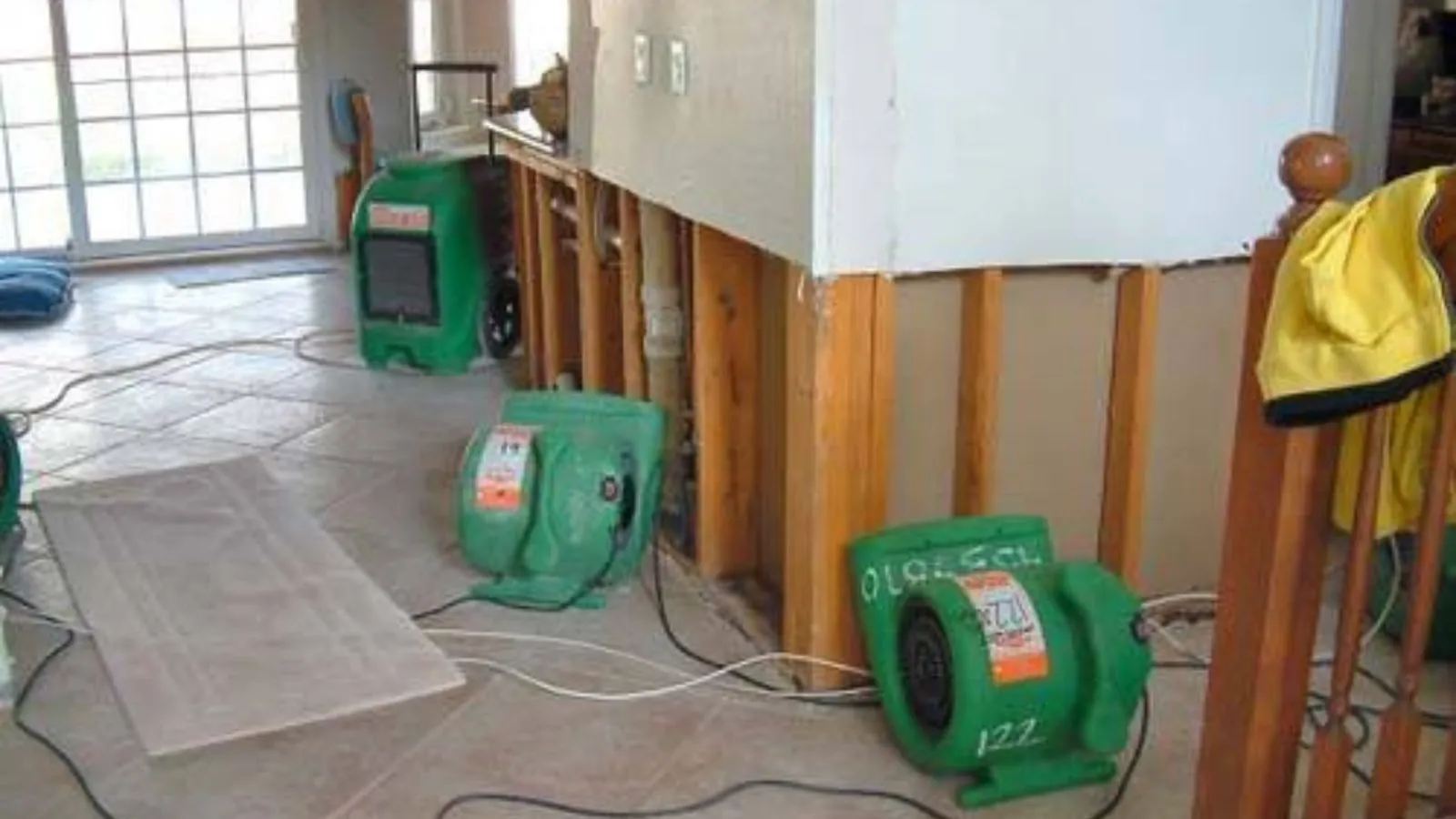
What wet drywall tells you
Drywall is gypsum between two layers of paper. Water weakens the paper, and the gypsum crumbles. A wall that is bubbling, stained, soft or peeling is holding water, and the visible mark is often smaller than the wet area behind it.
| Sign. | What it means. | Likely action. |
|---|---|---|
| Brown ring stain. | Water reached the paper from behind or above. | Find the source, read moisture, dry or replace. |
| Bubbling or peeling paint. | Moisture pushing the paint off. | Dry the wall, scrape and repaint after readings pass. |
| Soft or crumbly drywall. | Gypsum broken down. | Cut out and replace. |
| Musty smell with no stain. | Water inside the cavity. | Thermal scan and meter, small test cut. |
When drywall can be dried
Clean-water drywall that was wet for a short time can often be dried in place. Drywall wet by contaminated water, or wet for days, is cut out. Insulation inside the wall is usually removed because it holds water against the studs.
A technician cuts out drywall a few inches above the highest wet reading, called a flood cut. That keeps repair lines clean and removes every wet part.
Find the source.
A plumber or roofer repairs the cause. Moisture mapping shows how far the water went.
Open the wall.
Baseboards come off and cut lines are marked. Wet insulation comes out.
Dry the cavity.
Air movers and dehumidifiers run while readings are logged. See structural drying.
Patch and finish.
New drywall is hung, taped, mudded, primed and painted.
Painting too soon is the common mistake
A coat of paint seals in moisture. The stain returns, the paint peels and mold gets a hidden start. Ask for readings before any primer goes on. A stain-blocking primer helps on a dry wall and does nothing for a wet one.
Plaster walls in older homes behave differently. The Old Catonsville and Central Catonsville historic districts contain houses from 1866 to 1958 that may have plaster and lath. Plaster is heavy and hard to patch, so mention it on the first call.
Exterior walls, brick and older homes
Exterior walls carry insulation, sheathing and siding, so water can travel in several layers. Brick veneer can wick rain into the wall, and stucco can hold moisture against the sheathing. If a stain shows after storms and not after plumbing use, the source is probably outside.
In older houses with lath and plaster, the plaster keys hold the wall to the lath. When plaster gets wet it loosens, and a ceiling or wall can sag. A plaster contractor patches those, and we dry the framing behind it.
Check inside closets and behind furniture too. Water often shows first in a corner that gets no light. A moisture meter run along the baseboard of each wall takes a few minutes and can find a hidden problem early.
The ANSI/IICRC S500 standard guides when drywall can be dried in place and when it is cut out. Its core idea is the same one used above: measure, dry, measure again.
Safety steps before you open a wet wall
Check for electrical wiring and plumbing before cutting. Turn off power to the circuits in the wall, wear eye protection and a dust mask and do not cut into a wall that may hold a live water line. Older walls may contain materials that need testing before they are disturbed.
Wet walls in rentals and duplexes, such as those in the Winters Lane community, often involve a landlord, so tell the dispatcher who owns the building.
Wall damaged by water?
Call the 24/7 line. We trace the water before cutting.
Related leaks and what they cost
Walls wet from a burst line are covered under burst pipe damage, and walls wet from a frozen line under frozen pipe damage. Cost depends on the wall area, insulation, finish level and drying time.
- Wall area and height of the cut.
- Insulation removed.
- Finish level (texture, paint match).
- Drying days.
- Trim and baseboard replacement.
Sudden, accidental discharge is generally covered for the resulting damage. Read your policy and ask your insurer. Call the line for a real number.
Common questions
Yes. The line is answered 24/7, and a same-day response is planned when a crew is available.
Only after readings confirm the wall is dry. Paint over a damp wall traps moisture.
No. Cuts are made above the highest wet reading and only wet sections are replaced.
A moisture meter and a thermal camera show wet areas, and a small test cut can confirm.
Usually. It holds water against framing. Dry insulation can stay.