
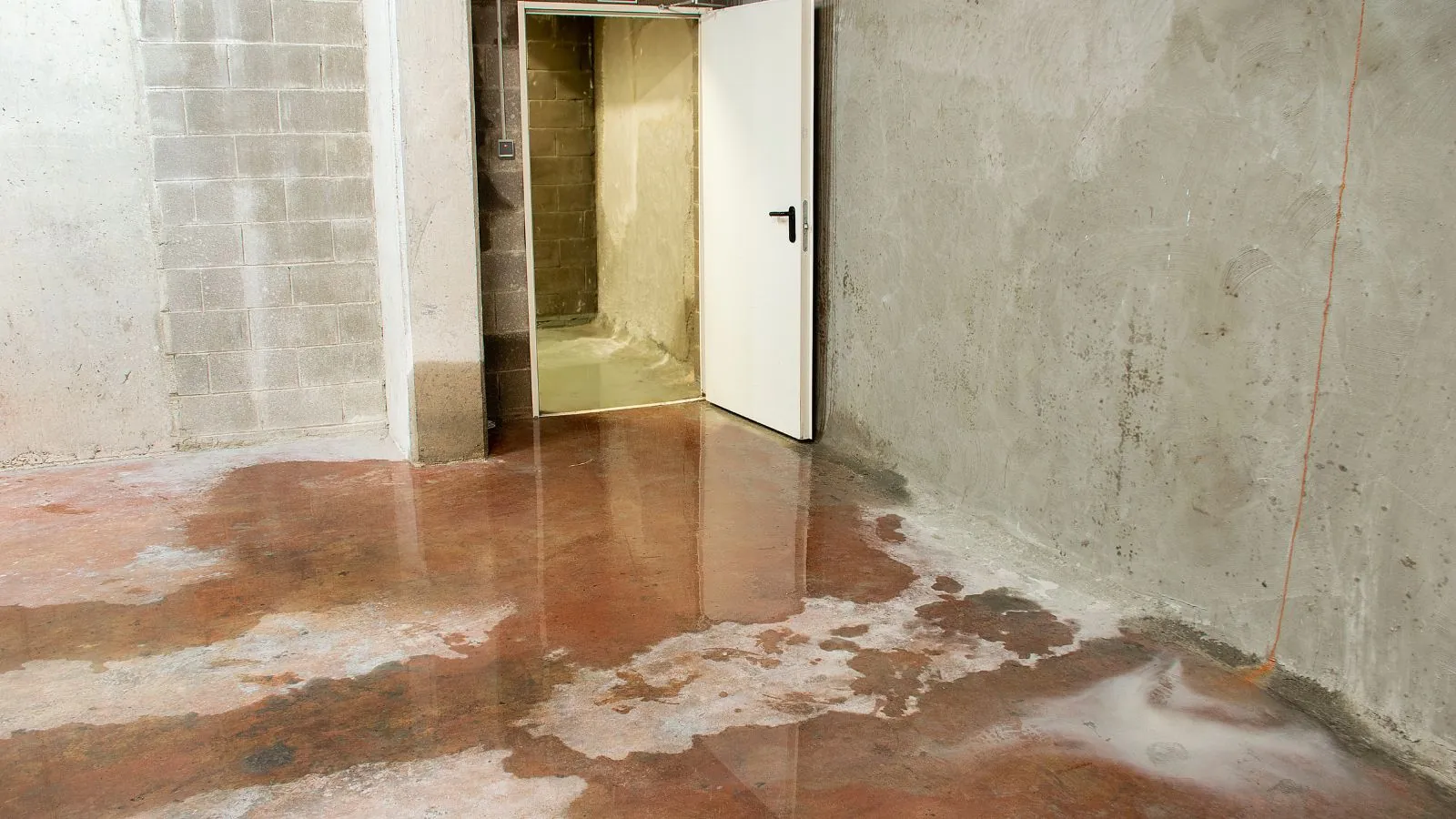
How basements flood
A basement is the lowest point in the house, so water finds it. Rain runs down the ground toward the foundation, pushes through cracks and the floor-wall joint, or overwhelms a sump pump. Plumbing and appliance failures send water downhill to the same place.
| Source. | What it looks like. | Notes. |
|---|---|---|
| Storm runoff. | Water through windows, doors or the wall joint. | Often Category 2 or 3. |
| Sump pump failure. | Water rises from the pit or floor. | Pump died, power out or capacity exceeded. |
| Foundation seepage. | Damp walls, slow wetting after rain. | Insurers often treat this as maintenance. |
| Plumbing or heater leak. | Local pooling near the source. | Clean water if supply line. |
| Sewer backup. | Floor drain overflow. | Category 3, see sewage backup. |
Heavy rain events near the Patapsco, such as the storms of July 30, 2016 and May 27, 2018 reported by the National Weather Service, show how fast runoff can overwhelm a basement. For source-specific cleanup, see storm water damage and sewage backup cleanup.
Electrical and carbon monoxide risk
Do not enter a flooded basement if the water reaches outlets, a panel or appliances. Gas furnaces and water heaters that were submerged need a professional check before use. Run no gas generators indoors.
Cleanup sequence
Remove wet materials.
Carpet, pad, insulation and lower drywall are removed if wet or contaminated.
Clean and sanitize.
Concrete and framing are cleaned and treated.
Dry the structure.
Air movers and dehumidifiers run until readings pass. See structural drying.
Stored items are the hardest part. Cardboard boxes, upholstered furniture and paper should be sorted quickly. Photographs and documents have their own handling rules, which the National Archives explains.
Finished versus unfinished basements
An unfinished basement with a concrete floor dries fast. A finished basement hides wet drywall, insulation and carpet that all need attention. Wall cavities behind paneling and cabinets hold water long after the floor looks clear. A thermal camera and meter find it. See also carpet restoration.
Sump pumps, drains and what to check after the water is out
A sump pump is only as good as its power and its discharge. A pump that runs on house current stops during an outage, which is when storms hit hardest. A battery backup keeps it running, and a high-water alarm tells you before the basement does.
After a flood, check that the pump runs, the discharge line is clear and the floor drain is open. Look at downspouts and grading outside, since water that pools next to the foundation finds its way in. These are maintenance fixes for a drainage contractor or a plumber, not part of the cleanup.
Keep stored items off the floor on shelves or pallets, and avoid cardboard in a damp basement. A hygrometer in the space tells you when humidity stays high, and a dehumidifier running year-round keeps it under control.
Basement jobs that involve outside water or sewage follow the ANSI/IICRC S500 category rules, which is why porous materials soaked in Category 3 water come out instead of being dried in place.
Basement calls also come from residential communities such as Westview Park, where the first question we ask is whether the lower level is finished and whether a sump pump is installed.
Basement flooded?
Call the 24/7 line. We start with safety, then pumping and drying.
Cost, coverage and flood maps
The Maryland Insurance Administration says homeowners policies generally do not cover flooding and treat foundation seepage as a maintenance issue. Sewer or water backup typically needs an endorsement that Maryland law requires insurers to offer. Check your policy, ask your insurer and keep photos.
- Depth and area of water.
- Finished or unfinished.
- Water category.
- Drying time.
- Rebuild scope.
Baltimore County requires building permits for work in a 100-year floodplain. We explain scope and price before work starts, and you can call the line for a real number.
Common questions
Yes. The line is answered 24/7, and a same-day response is planned when a crew is available.
The Maryland Insurance Administration says foundation seepage is generally a maintenance issue and not covered. Sewer backup usually needs an endorsement. Check your policy.
Small amounts, yes. Deep water, contamination or electrical risk needs a professional.
It varies with materials and water depth. Readings show when it is ready.
No. Restoration cleans up and dries after water gets in. Waterproofing stops water from entering, through drainage, grading, sealing or foundation repair, and that is a different trade. If water keeps returning, ask a waterproofing or foundation contractor to assess the cause.
Often, if the water was clean and dried quickly. Contaminated water means removing porous materials.