
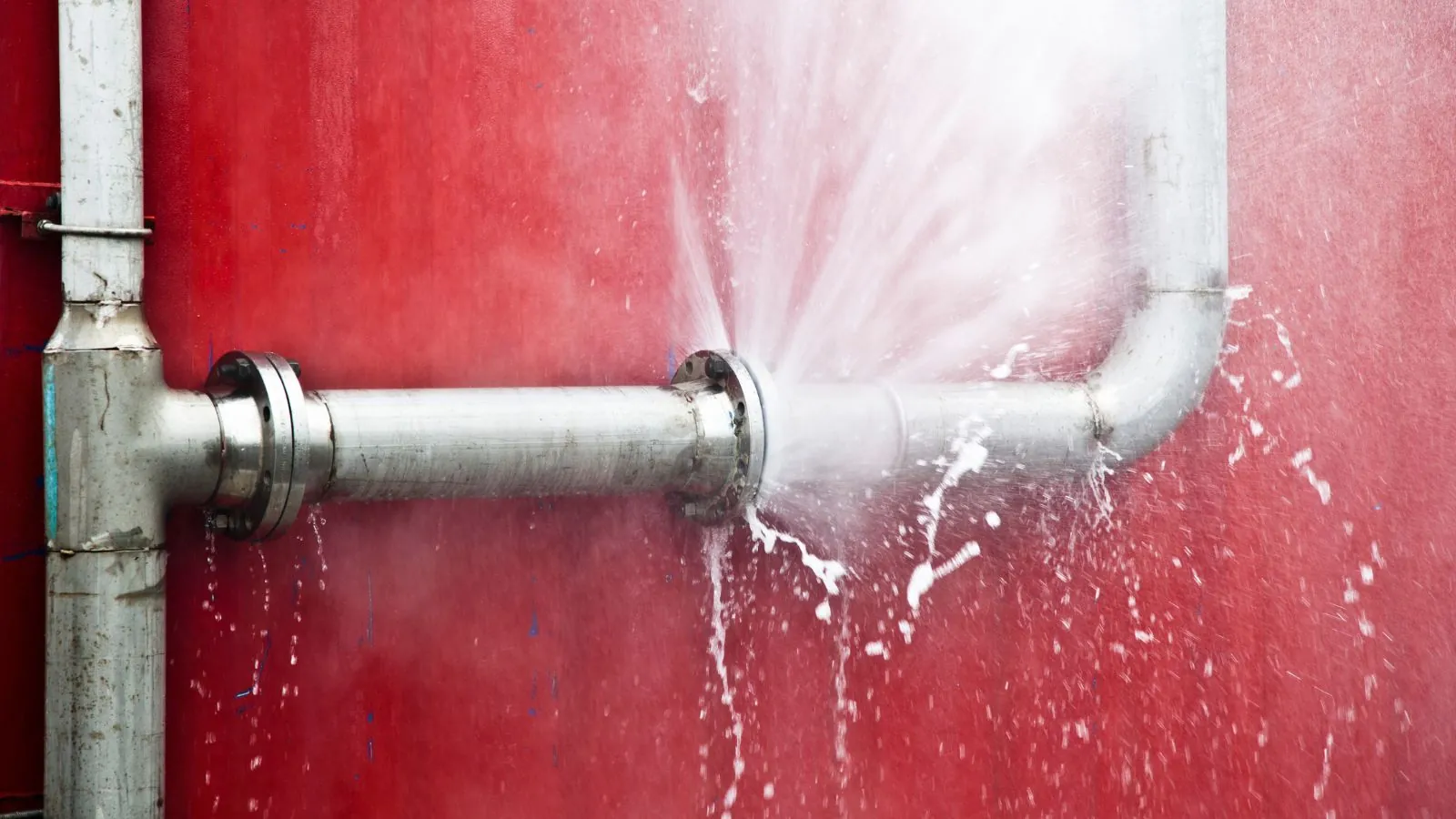
Burst pipe: what to do first
A burst supply line is different from a slow leak because the water is under pressure. A split in a half-inch line can release a lot of water in minutes. The first job is to stop the flow, and everything after that is about limiting how far the water traveled.
Shut off the main.
Find the main water valve, usually where the line enters the house, and turn it fully off. Then open a low faucet to drain what is left in the lines.
Check the electrical risk.
If the water reached outlets, appliances or the panel, do not stand in it. Cut power only from a dry spot or call the utility.
Protect what you can.
Lift furniture legs onto blocks, pull rugs and move electronics and papers to a dry room.
Photograph before moving.
Take photos and short videos of the pipe, the wet areas and damaged belongings for your insurer.
Then call a plumber for the pipe itself and call us for the water. Baltimore County says a permit is required for all plumbing and gasfitting work and that only a Baltimore County licensed plumber or gasfitter contractor can apply for it. Ask your plumber about that before the repair is scheduled.
Why pressurized failures spread faster than leaks
A burst pipe sprays or pours into the wall cavity where it sits. The wall below fills like a trough, and water runs along studs, through bottom plates and under baseboards into the next room. A leak above a ceiling can wet the ceiling below, the walls beside it and the floor underneath.
That path is why a technician checks with moisture meters and a thermal camera before deciding what to open. A wall that looks dry two feet from the break may hold water at the bottom plate. The visible stain is usually the smallest part of the problem.
Common causes of burst lines in older houses
Old galvanized or copper lines can corrode through. Poor solder joints and failed push fittings let go under pressure. Supply hoses to toilets and sinks can burst at the connection. A house built before 1950, as many in the Old Catonsville Historic District were, may still carry some original piping, so ask your plumber what material is behind your walls.
Cleanup, drying and repair after a burst
Extract the water.
Pumps and extractors remove what is standing. This is the same first step described under water extraction.
Open what is wet.
Baseboards come off and small cuts may be made in drywall so air can reach the cavity. Soaked insulation is removed.
Dry with equipment.
Air movers and dehumidifiers run while readings are logged. Equipment moves as the wet zone shrinks.
Repair the finish.
Drywall, paint, flooring and trim are replaced once the readings pass. The plumbing repair itself is the plumber's work.
Burst pipes often wet a kitchen or bathroom. If cabinets are involved, the kitchen water damage page covers what can be dried and what has to be replaced.
Clean water is still a problem after 48 hours
A burst supply line carries clean water. That is the best case, since the pad under carpet and some drywall may be dried instead of discarded. But clean water turns into a larger loss when it sits. Over a day or two it picks up bacteria from the materials it soaks, and a closed wall gives mold the moisture it needs.
That is why speed matters even when the water was clean. The faster the equipment goes in, the more of your house stays in place. A burst that is stopped and extracted the same day often needs far less rebuilding than one discovered after a weekend away.
The ANSI/IICRC S500 standard for water damage restoration treats clean supply-line water as Category 1, and it also warns that the category can worsen with time. That is the reason a burst line is worth acting on the same day.
Pipe broke and walls are wet?
Call the 24/7 line. We handle the drying and the documentation after your plumber stops the leak.
What drives the price of burst pipe cleanup
- How long the pipe ran before it was shut off.
- How many rooms and floors the water reached.
- Whether the finished surfaces are drywall, plaster, hardwood or carpet.
- Drying days and the number of air movers and dehumidifiers needed.
- Rebuild scope after the walls and floors are verified dry.
The Maryland Insurance Administration says a suddenly burst pipe that floods floors is generally covered for the water damage, though not for repairing or replacing the pipe itself. Your policy decides, so read it and ask your insurer. We explain the scope and the price before work starts.
In Ellicott City and Elkridge across the county line, the same steps apply, but the permit office is different. See Ellicott City for Howard County details.
Common questions
Yes. A burst pipe does not wait for business hours, and the line is answered around the clock. Tell the dispatcher you have shut off the main, and they will start planning a same-day response when a crew is available.
Shut off the water first, then call both. The plumber repairs the pipe and we remove water and dry the structure. A plumber can fix the break while we extract water in another part of the house.
Look near where the water line enters the house, often in a basement, utility room or crawl space, and near the water meter. The valve may be a wheel or a lever. Find it before an emergency so you are not searching while the water runs.
The Maryland Insurance Administration says a suddenly burst pipe that floods floors is generally covered for the water damage but not for the pipe repair. Your exact coverage depends on your policy, so ask your insurer before you decide anything.
It varies with the materials and the amount of water. Many jobs take several days of equipment and daily readings. A technician proves dryness with a moisture meter and will not guess.