
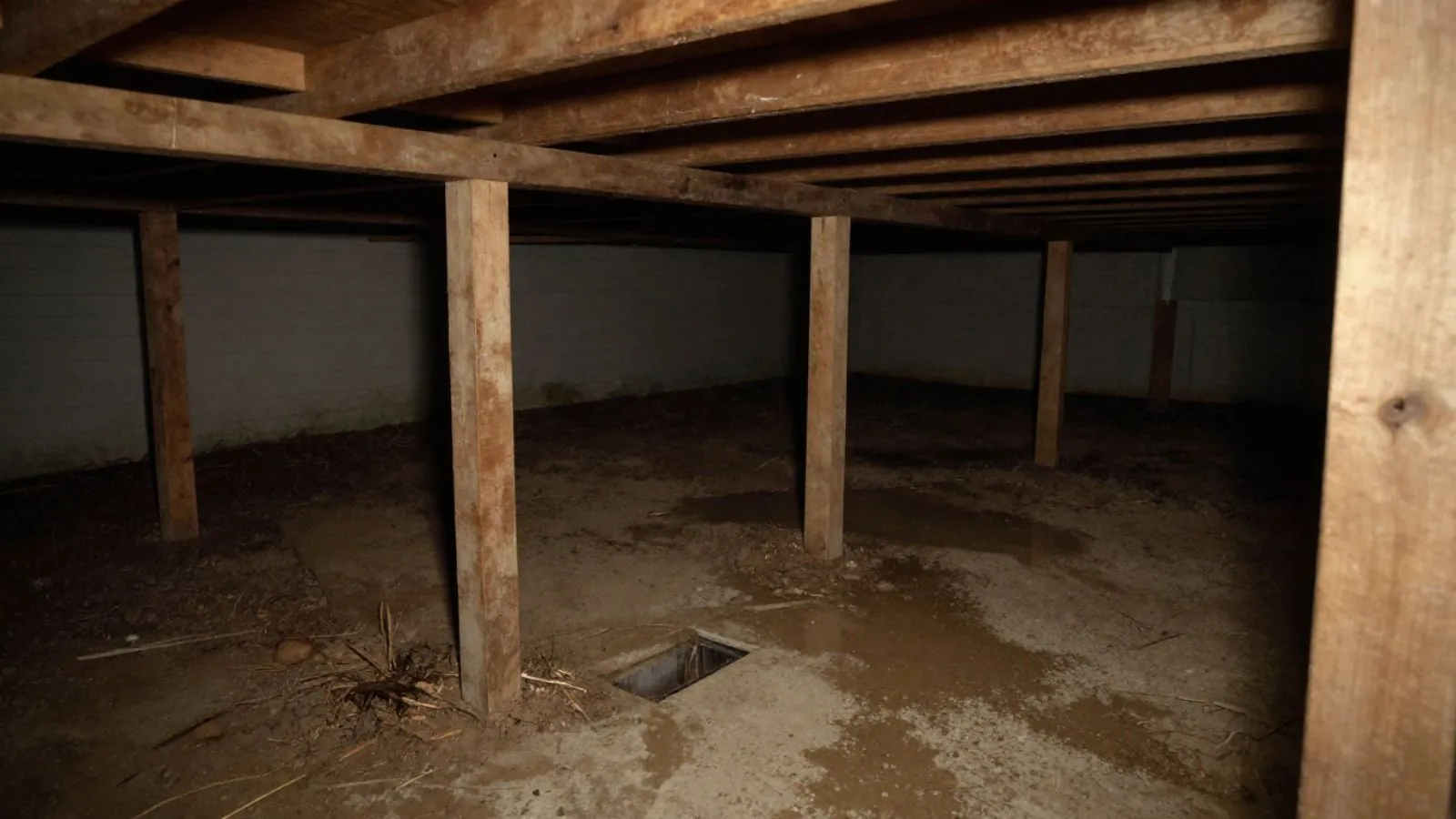
Why crawl space water goes unnoticed
Nobody looks under the house unless something smells or sounds wrong. Water can sit in a crawl space for weeks, soak insulation and raise humidity in the floor system above. You may notice only a musty odor in the rooms, cold floors or cupping in hardwood.
Crawl space problems are slow, which makes them easy to underestimate. The moisture rises, wets the subfloor from beneath and feeds wood rot over time.
Where crawl space water comes from
| Source. | Clue. | Response. |
|---|---|---|
| Plumbing leak above. | Drips from pipes, wet insulation under one area. | Plumber fixes the pipe, we dry the space. |
| Groundwater after heavy rain. | Standing water that returns after storms. | Pump the water, then address drainage. |
| Roof or gutter runoff. | Water pooling near foundation vents. | Redirect runoff, then dry the space. |
| Condensation from humid air. | Beaded moisture on ducts and joists. | Dehumidify and review ventilation. |
A leaking drain line is more serious than a supply line. If the water has a sewage smell, stop and see sewage backup cleanup, since contaminated water changes how the space is handled.
Entering a crawl space
Never enter a crawl space with standing water if wiring or equipment is nearby. Wear a respirator, gloves and boots, tell someone before you go in, and leave if the air smells of gas or sewage.
What crews do under the house
Pump the water.
Small submersible pumps clear standing water. Mud and debris are cleared.
Remove wet insulation.
Fiberglass batts that sag or hold water are removed because they keep the floor wet.
Dry the space.
Air movers and a dehumidifier lower the moisture. Readings on joists and subfloor guide how long the equipment runs.
Sanitize if needed.
Surfaces touched by contaminated water are cleaned and treated.
For the equipment and readings, see structural drying. If moisture reached the rooms above, the hardwood floor page covers cupping and refinishing.
Older homes and crawl spaces in Catonsville
Many older houses in the Old Catonsville and Central Catonsville historic districts, built between 1866 and 1958, were constructed over crawl spaces or partial basements. Older foundations may have vents, dirt floors or stone walls. We do not know your house until we see it, so mention the foundation type on the first call.
Humidity, mold risk and the vapor barrier
Even without standing water, a damp crawl space raises the moisture content of the wood above it. Wood framing that stays wet for long periods can support mold growth and decay. The EPA advises drying wet materials within 24 to 48 hours to limit mold, and a crawl space that stays humid never gets that chance.
A ground vapor barrier, a working dehumidifier and clear vents slow the cycle. These are building-science fixes, not cleanup, and a contractor who does foundation or ventilation work handles them. We dry the structure and tell you what the readings show so you can decide what comes next.
Measure first and decide second. A moisture meter on the joists tells you more than a smell test, and a reading taken before and after drying shows whether the work did its job. Ask any company to show you those numbers.
Crawl space wet or musty?
Call the line and describe what you see. We plan pumping and drying.
Cost and prevention
- Depth of water and size of the space.
- Access, since tight spaces add labor.
- Insulation and vapor barrier removal.
- Drying days and equipment.
- Fixes to drainage and ventilation that follow.
Groundwater and seepage through foundation walls is generally treated as a maintenance issue by insurers, according to the Maryland Insurance Administration. A plumbing leak above the space is treated differently. Check your policy and ask your insurer. Call the line for your real number.
Common questions
Yes, for active leaks and flooding. The line is answered 24/7. A same-day response is planned when a crew is available.
Not with standing water near wiring. Call first. If you must look, use protective gear and tell someone.
Fiberglass that has sagged or stayed wet is normally removed because it holds water against the floor.
Not if there is standing water or an active leak. The source must be stopped and the water removed first.
It depends on the source. Plumbing leaks and groundwater are treated differently. Check your policy and ask your insurer.