
Why does my house still feel damp after the water is gone?
Removing standing water takes the liquid off the floor. It does not remove what soaked into drywall, wood and concrete. Those materials release moisture slowly into the air, which is why a room can feel humid for days after a leak and why a wall can stay wet inside long after it looks dry.
You might notice any of these:
- A musty smell that persists after cleaning.
- Baseboards that feel cool or damp.
- Paint that bubbles or peels weeks later.
- Windows that fog from the inside.
- A humidity reading that stays high with the windows closed.
Those are signs of moisture still held in the structure, and drying equipment is how you pull it out.
How drying works
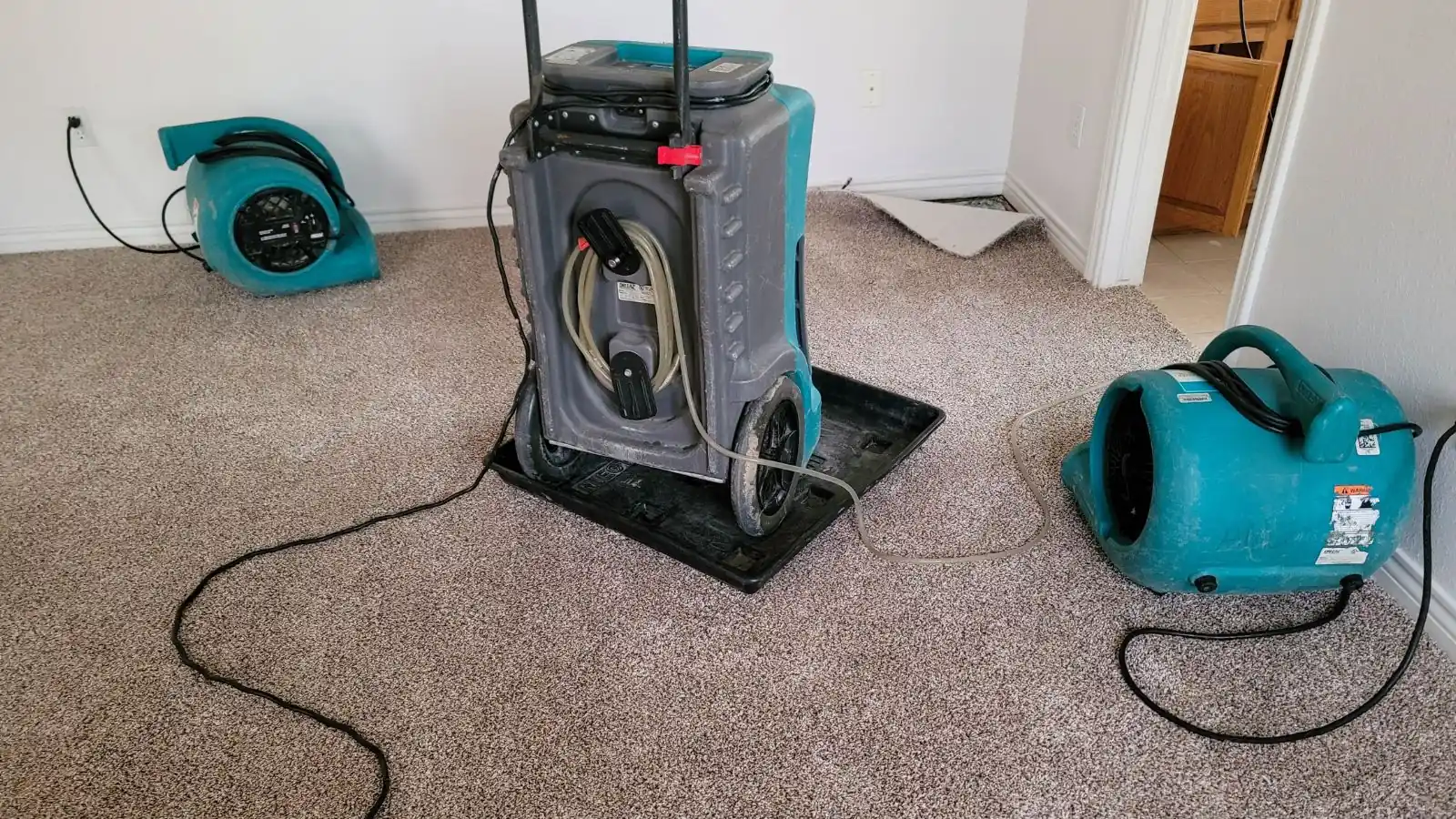
Wet materials give up moisture to the air. Air movers push dry air across wet surfaces, which speeds that release. Dehumidifiers then remove the moisture from the air so it can pick up more. The two work as a loop, and a closed space with controlled airflow dries fastest.
| Equipment. | What it does. | Where it goes. |
|---|---|---|
| Air movers. | Move air across wet surfaces. | Along walls and floors, angled at damp areas. |
| Refrigerant dehumidifiers. | Pull moisture from the air by cooling it. | Central in the wet zone, with doors closed. |
| Desiccant dehumidifiers. | Absorb moisture, useful in cold or very damp spaces. | Spaces with low temperatures or heavy loads. |
| Floor and cavity systems. | Pull moisture from under flooring or inside walls. | Where hardwood, cabinets or wall cavities hold water. |
Measure, do not guess
A moisture meter reads the water content of drywall, wood and concrete. A thermal camera shows cool, wet areas behind surfaces. A hygrometer reads the humidity of the air. A technician records these at the start and on each visit, so you can see the numbers fall.
Drying is done when the wet materials match the readings of a dry reference material in the same house, not when they feel dry. Ask any company to show you its readings.
Map the wet zone.
Meters and a thermal camera mark where moisture is. The mapping covers surfaces and cavities.
Set the equipment.
Air movers and dehumidifiers are sized to the room, not guessed.
Check daily.
Readings are logged, equipment is moved and settings change as areas dry.
Verify and release.
Equipment comes out when readings match the dry standard.
How long drying takes
There is no single answer. Many jobs take several days, and dense materials such as hardwood, plaster and concrete take longer than drywall. The National Archives advises air drying wet paper within two days, and the EPA advises drying wet building materials within 24 to 48 hours to limit mold. The window matters even when the full job takes longer.
In Catonsville, summer humidity can slow drying and winter cold can change how dehumidifiers work, so the equipment is chosen for the season.
Safety steps while drying equipment runs
Keep cords out of standing water and off walkways, do not unplug or move equipment that a technician has placed and keep children and pets away from running machines. If a breaker trips, tell the crew instead of resetting it repeatedly.
Walls still damp?
Call the 24/7 line. We measure first and set equipment to match.
Where drying fits with the rest of a job
Drying follows extraction and comes before repair. After a burst line, see burst pipe damage. After standing water, see extraction. For a basement that stays damp, see basement cleanup.
Cost and insurance
- Number of rooms and materials involved.
- Equipment count and days on site.
- Material density.
- Season and conditions.
- Whether demolition or rebuild follows.
Insurers often ask for drying logs to document the claim. Keep them. Check your policy and ask your insurer, and call the line for a real number.
Common questions
Moisture stays in drywall, wood and concrete after the standing water is removed. It releases slowly into the air until drying equipment pulls it out.
Yes. The line is answered 24/7, and a same-day response is planned when a crew is available. Quick drying limits damage and mold risk.
A moisture meter compares wet materials to a dry reference in the same house. Equipment comes out only when the readings match.
For a small spill, maybe. For wet walls, floors or large areas, household units are too small and cannot reach inside cavities.
Often, when the water damage itself is covered. Drying logs support the claim. Ask your insurer.