
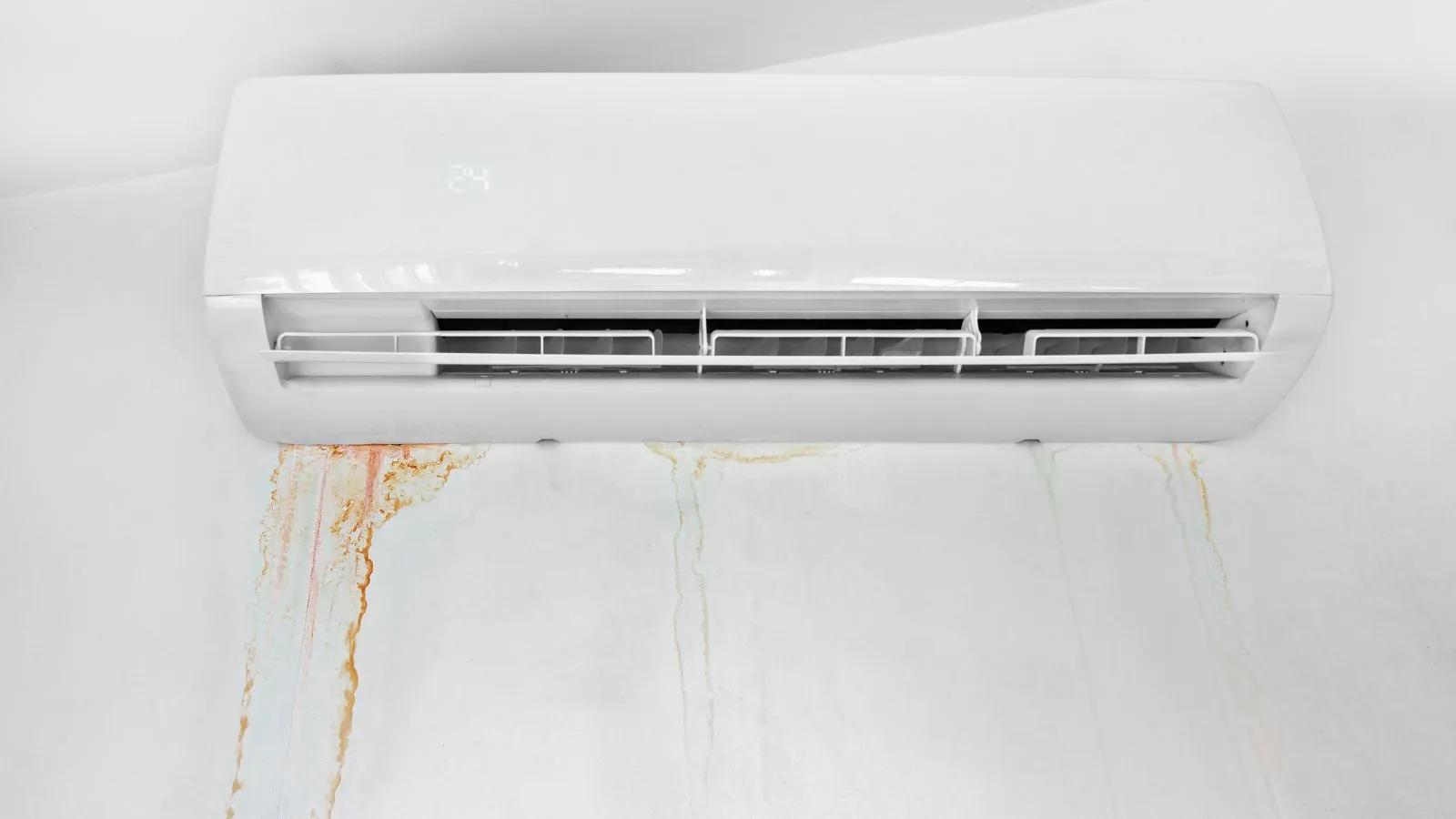
AC water: where it comes from
An air conditioner pulls humidity out of the air, and that moisture has to leave through a drain line. When the line clogs, the drain pan fills and overflows. A frozen evaporator coil does the same thing in a different way, since the ice melts when the system shuts off and floods the pan.
The result is water in the place the equipment sits, often an attic, a closet, a basement or a crawl space. The water travels down through insulation and ceilings until it finds a place to drip.
| Cause. | What you notice. | Who fixes it. |
|---|---|---|
| Clogged condensate drain. | Water in the pan, stain below the air handler. | HVAC technician clears the line, we dry what got wet. |
| Frozen evaporator coil. | Ice on the lines, warm airflow, then a flood on thaw. | HVAC technician finds the airflow or refrigerant cause. |
| Cracked or rusted drain pan. | Water below the unit even with a clear drain. | HVAC technician replaces the pan. |
| Disconnected or sagging drain line. | Drip near the line or along the wall. | HVAC technician reattaches the line. |
The slow leak is the usual one
AC leaks are often slow and run for weeks. Insulation soaks first, then the ceiling below shows a yellow stain, then the drywall softens. By the time a drip shows, the attic framing may have been wet for a long time. That is why a thermal camera and a meter matter more than a visual check.
Moisture sitting in insulation and framing also invites mold growth. The EPA advises drying within 24 to 48 hours to limit that risk, and long-running AC leaks often exceed that window.
What to do while you wait
- Switch the thermostat to off so the unit stops producing condensate.
- Place a bucket under any drip and a towel under the air handler.
- Move belongings out from under wet ceilings.
- Do not use the ceiling light if water is near the fixture.
- Photograph the stain, the unit and any standing water.
Water and attic electrical
Air handlers have wiring and a power disconnect close by. If water has reached the unit's electrical box or the switch, do not touch it. Cut the breaker from a dry spot or call the utility.
Cleanup after an AC leak
Find the wet zone.
Meters and a thermal camera map the path from the unit to the stain.
Remove wet insulation.
Soaked attic insulation holds water against framing and is typically removed.
Dry the structure.
Air movers and dehumidifiers dry framing and drywall. See structural drying.
Repair the ceiling.
Sagging or stained drywall is patched or replaced after readings pass. See ceiling repair.
An HVAC technician fixes the cause. We do not repair air conditioners, and a good job pairs the two so the leak does not return after the cleanup.
Preventing the next condensate overflow
- Have the drain line flushed at the yearly service visit.
- Install a float switch that shuts the unit off when the pan fills.
- Replace filters on schedule, since low airflow freezes coils.
- Check the pan and line after a season of heavy use.
- Look at the ceiling below the air handler for new stains.
A float switch is cheap and shuts the system down before the pan spills. Ask your HVAC contractor about one when the unit is serviced.
Professional drying of a wet attic or ceiling follows the ANSI/IICRC S500 standard, which asks for moisture readings before, during and after the work. Ask whoever dries your house for those readings.
Water coming from the AC?
Turn the system off and call the 24/7 line. We handle the water damage inside the house.
Cost and coverage for AC water damage
Cost depends on the area affected, the insulation involved, the ceiling type and how long equipment runs. Coverage depends on whether the discharge was sudden and accidental, and gradual leaks may be treated differently. Read your policy, ask your insurer and keep photos. We explain the scope and price before work starts, and you can call the line for a real number.
Common questions
Yes. The line is answered 24/7. Turn the AC off, then call so a same-day response can be planned when a crew is available.
No. A leaking unit keeps producing condensate. Turn it off until an HVAC technician clears the drain or repairs the cause.
No. We handle the water damage. An HVAC technician repairs the equipment, and we recommend scheduling both so the leak does not repeat.
It should be assessed quickly. Wet insulation holds moisture against framing, and the EPA advises drying within 24 to 48 hours to limit mold risk.
It depends on whether the leak was sudden and accidental, and gradual leaks are treated differently. Ask your insurer and keep photos.