
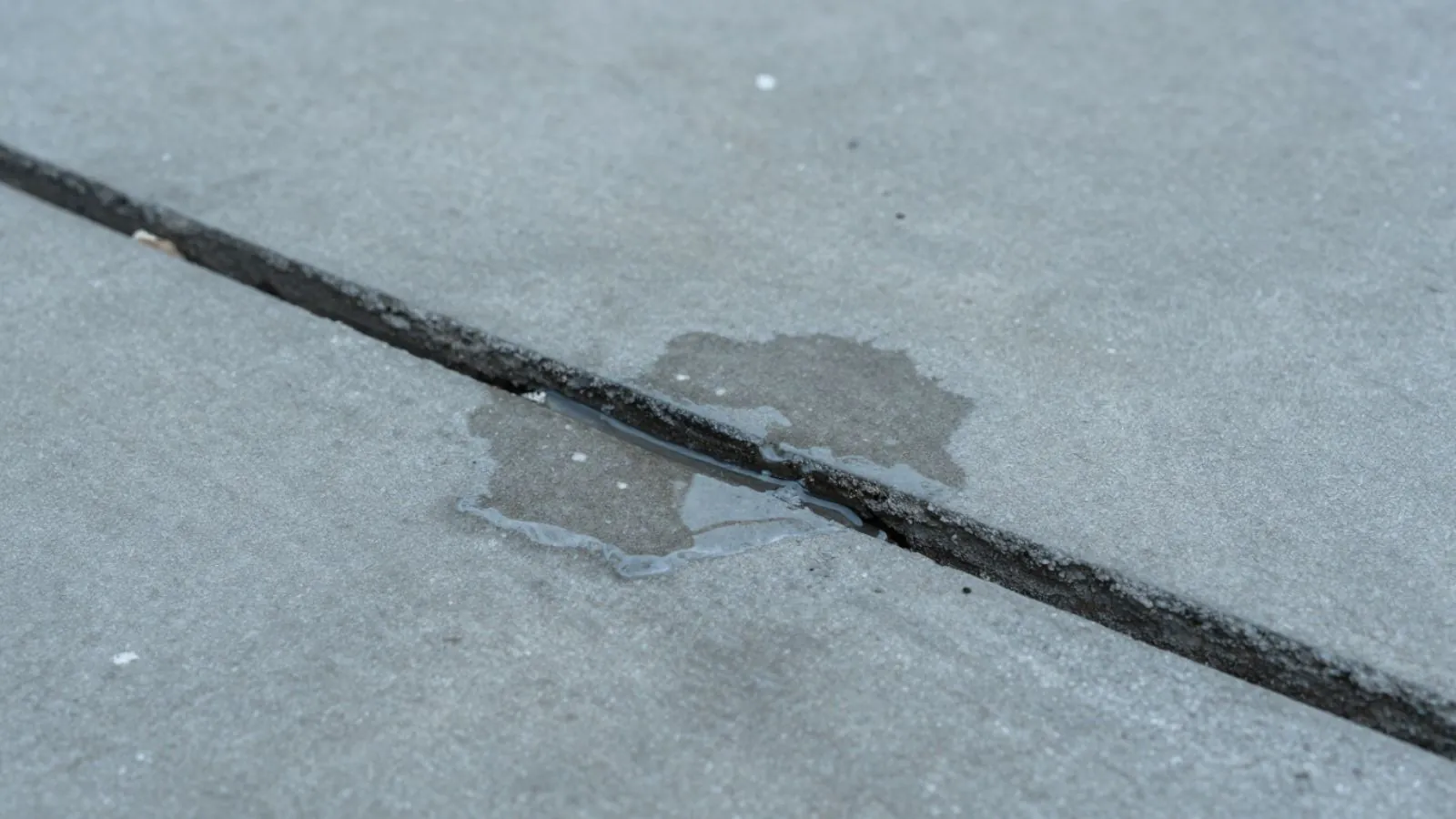
Signs your floor is leaking from below
A slab leak is hard to see because the pipe is buried in or under concrete. You see its effects instead. Water rises through cracks, flooring cups or lifts, carpet feels damp, and a hot spot appears on the floor when a hot-water line is leaking.
Check for these before you assume the problem is elsewhere:
- A water meter that moves when all fixtures are off.
- Warm or hot patches on the floor.
- The sound of running water with everything off.
- Damp carpet, cupped hardwood or a musty smell near the floor.
- A water bill that jumps without a change in use.
To test, turn off every fixture and watch the meter. If it still moves, water is leaking somewhere, and if shutting the main stops it, the leak is on the house side.
Why slab leaks are different from other leaks
In a wall leak, the water shows up at the wall. In a slab leak, water travels through the concrete, along the gravel bed beneath it and up through joints and cracks. It can wet flooring across a room from a pinhole you cannot see. The damage often covers more area than the pipe repair does.
| Question. | What a plumber does. | What the restoration side does. |
|---|---|---|
| Where is the pipe?. | Pressure test and electronic leak location. | Meter readings trace wet flooring and walls. |
| How is it fixed?. | Reroute, spot repair or replace the line. | Not part of restoration work. |
| What got wet?. | Not their job. | Remove wet flooring, dry the slab surface and structure. |
| Is it dry?. | Not their job. | Moisture readings on the slab and framing. |
Where we come in
A plumber finds and fixes the pipe. Plumbing work in Baltimore County needs a permit, and the county says only a licensed plumber or gasfitter contractor can apply for it. We handle the water that the leak put into your house, including flooring, baseboards and lower walls.
Confirm the water is off.
The main stays closed until the plumber locates the leak.
Open and inspect flooring.
Carpet, pad or planks are lifted where meters read wet.
Dry the slab and walls.
Air movers and dehumidifiers run, and readings on the concrete and framing are logged. See structural drying.
Rebuild the finish.
New flooring goes in only after the slab and the walls read dry.
Concrete holds water longer than most materials. A slab can look dry on the surface and release moisture for days, which is why moisture readings are taken at several points over time instead of once.
Flooring decisions after a slab leak
Carpet and pad that got wet from a clean supply line can sometimes be dried. Hardwood and laminate often cup or swell and may need replacement. The hardwood floor page and the carpet page explain how that call is made.
What a slab leak costs you if you wait
A leak under a slab runs around the clock. Water is wasted, flooring is soaked from below, and the moisture reaches baseboards and the bottoms of walls. A plumber who locates the leak early often limits the area that has to be opened.
Keep the water bill, the meter reading photos and any plumber report. They show your insurer when the leak started and what it affected. Photograph flooring changes before anything is lifted.
Do not tile or lay new flooring over a slab that has leaked until it has been tested dry. Trapped moisture lifts adhesive and causes new cupping, and the repair gets done twice.
Drying a slab and the flooring above it is measured work under the ANSI/IICRC S500 standard. Concrete in particular needs repeated readings, since a dry surface can sit over a wet slab.
Water rising through the floor?
Shut off the main and call the 24/7 line. We start drying while the plumber locates the pipe.
Cost and insurance for slab leaks
Cost depends on the flooring involved, the area, drying days and rebuild scope. Coverage varies a lot because insurers treat gradual and sudden leaks differently. The Maryland Insurance Administration says coverage turns on your policy language, so read it and ask your insurer. Call us for a number tied to your house.
Common questions
Yes. The line is answered 24/7. Shut off the main water valve, then call so a same-day response can be planned when a crew is available.
Common signs are a moving water meter with fixtures off, warm floor spots, damp flooring and unexplained bills. A plumber confirms it with testing.
No. A licensed plumber locates and repairs the pipe. We dry and restore what the water damaged.
It varies with the thickness, the leak duration and conditions. Readings over several days show when it is ready.
It depends on your policy and whether the leak was sudden. Ask your insurer and keep photos and plumber reports.