
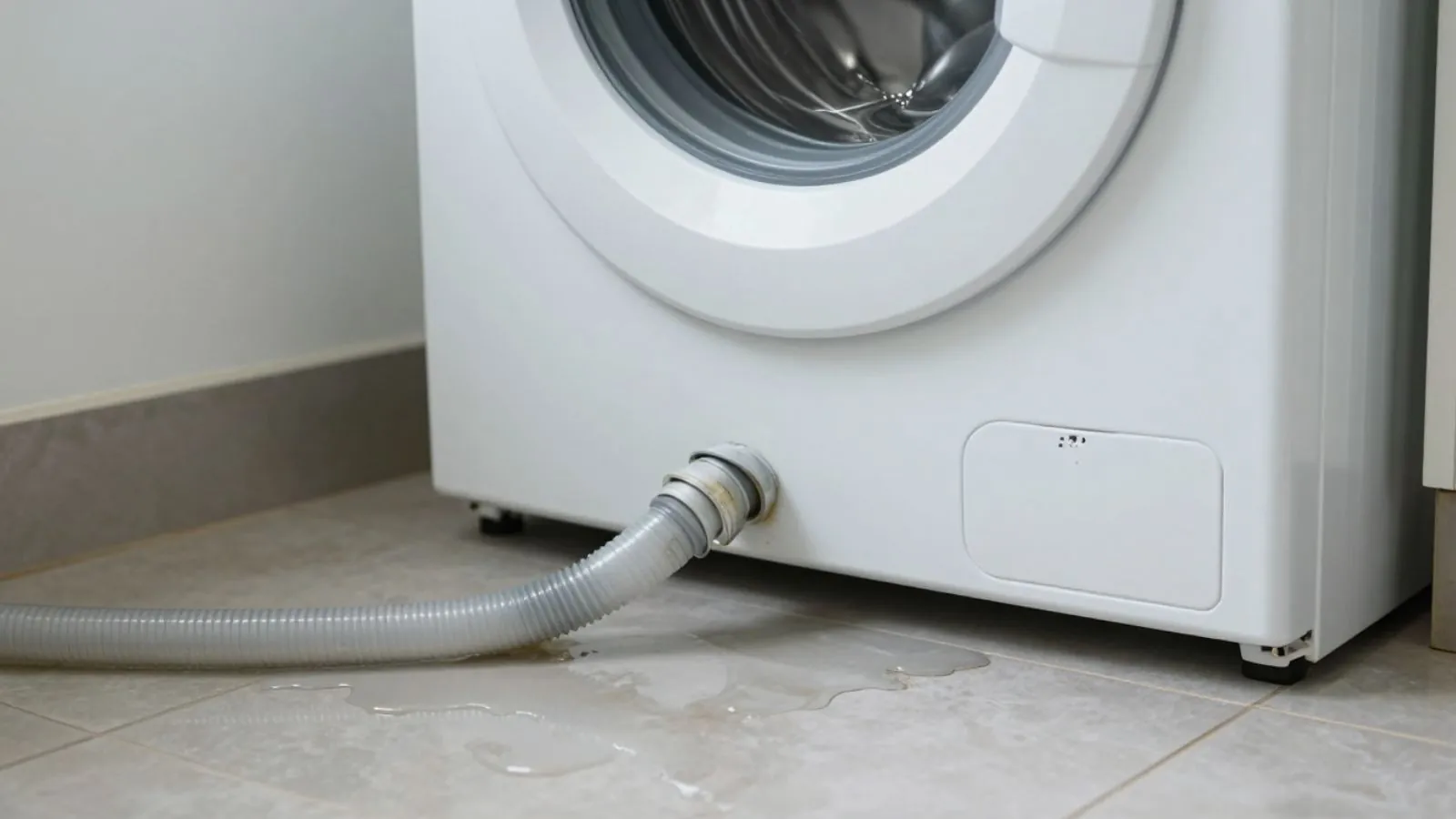
Appliance leaks that look small and are not
A dishwasher that drips onto a floor looks like a puddle. Underneath, the water has gone into the cabinet base, the subfloor and the floor below. Appliance leaks are quiet, and the damage grows while the machine keeps running.
Common signs include a musty smell near the machine, a floor that feels soft, flooring that lifts at the seams and stains that appear on a ceiling directly below a laundry room or kitchen.
Safety steps: unplug only from a dry position
Appliances stand in water and carry current. If the floor is wet around the plug, cut power at the breaker panel from a dry spot, or call the utility. Never reach behind a machine standing in water.
Where each appliance sends its water
| Appliance. | Common failure. | Where water hides. |
|---|---|---|
| Washing machine. | Burst hose, clogged drain, overflow. | Laundry room floor, wall behind, ceiling below. |
| Dishwasher. | Door gasket, supply line, drain hose. | Cabinet base, subfloor, flooring beside it. |
| Refrigerator with ice maker. | Supply line to the ice maker splits. | Behind the unit, under flooring, in the wall. |
| Sink supply lines. | Braided hose corrodes or loosens. | Cabinet floor, wall cavity, flooring. |
The refrigerator line is the least visible. It is a thin tube pushing water behind a heavy unit, and a pinhole can run for weeks. If your floor near the fridge is soft or discolored, pull the unit out and check.
What cleanup involves for an appliance spill
Stop the water.
Close the valve behind the appliance. If you cannot reach it, close the main.
Pull the appliance.
The machine is moved so the floor and wall behind it can be checked.
Extract and scan.
Standing water is removed and moisture meters trace where it traveled under flooring and into cabinets.
Dry with equipment.
Air movers, floor mat systems and dehumidifiers pull moisture from the floor system. Cabinet toe kicks may be opened.
In a kitchen, wet cabinet bases and laminate floors are the main concern, which the kitchen water damage page covers in detail. For flooring that cups or buckles, see hardwood floor damage.
Clean water, gray water and what it changes
Supply-line water is clean, which means more materials can be dried and saved. A washing machine overflow can be gray water if it carries detergent and soil, and a dishwasher drain failure can carry food waste. The category affects whether the pad, cabinet base or insulation can stay.
The ANSI/IICRC S500 standard classifies water as Category 1, 2 or 3, and the category can worsen as water sits. The sooner the water is out, the more options you keep.
Judging whether flooring, pad or cabinets can be dried follows the ANSI/IICRC S500 water categories. Washer and dishwasher discharge is usually treated as Category 2 for that reason.
Machine flooded the room?
Call the 24/7 line. A technician traces where the water traveled before it settles in.
Preventing the next appliance flood
- Replace rubber hoses with braided stainless lines and check them yearly.
- Turn the washer supply valves off when you travel.
- Do not run the dishwasher or washer while away.
- Place a leak sensor behind the refrigerator and under the dishwasher.
- Know where your main shut-off is.
Cost and insurance for appliance leaks
Cost depends on the rooms involved, the flooring type, whether cabinets were wet and the drying time. The Maryland Insurance Administration says sudden, accidental discharge is generally covered for the resulting damage, but not for the appliance itself. Long-term seepage is treated differently, so read your policy and ask your insurer. Call the line for your real number.
Common questions
Yes. The line is open 24/7. Close the appliance valve, then call so a same-day response can be planned when a crew is available.
Soft spots, cupping, lifted seams, a musty smell or a stain on the ceiling below are common signs. A moisture meter confirms it.
Supply water is clean, but drain water can carry food and soap and may be treated as gray water. A technician classifies it on site.
Sudden, accidental discharge is generally covered for the resulting damage but not for the appliance, per the Maryland Insurance Administration. Check your policy.
Waiting lets water soak deeper and gives mold time to start. Water that sat for a weekend is far harder to dry than water removed the same day.