
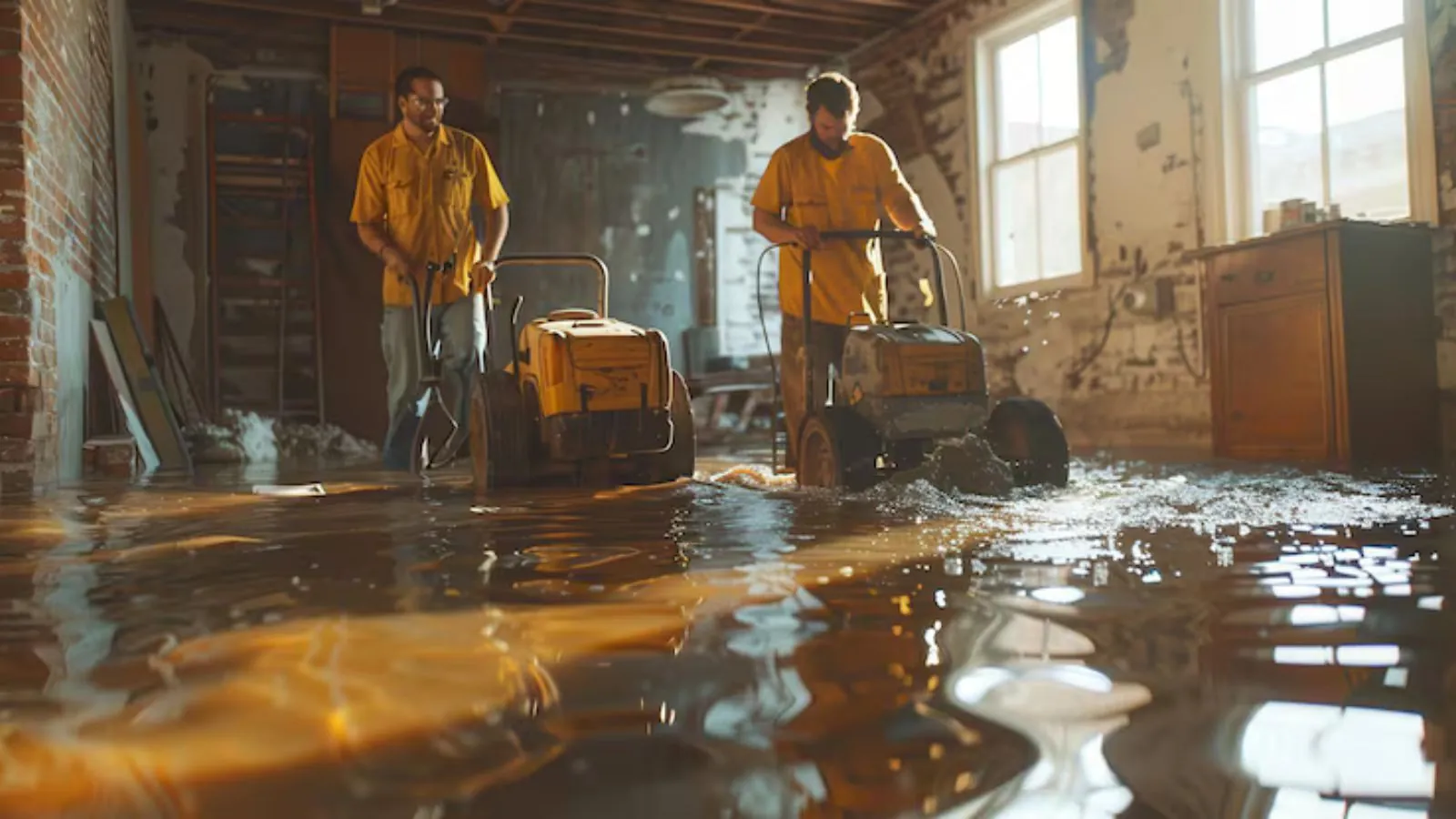
When standing water is an emergency
Standing water is any water that sits on a floor instead of draining or evaporating on its own. It might be a puddle that spreads under a refrigerator, a washing machine flood that reaches the hallway or an inch of water across a finished basement. If you can see it pool, it is already moving into whatever sits under it.
Treat it as an emergency when any of these is true.
- The water is spreading toward carpet, hardwood or a wall.
- The water came from a source you cannot identify or cannot shut off.
- The water is cloudy, smells or may have come from a drain, a toilet or outside the building.
- Water has reached an outlet, a power strip or the base of an appliance.
Electrical risk comes before everything else
If water touches outlets, a panel or anything plugged in, stay out of the room. Cut power at the panel only if you can reach it without stepping in water. If you cannot, call the utility or 911 about the electrical risk before you call us. Never enter standing water around live equipment.
What crews use to pull water out
The tool depends on how deep the water is and what it covers. Submersible pumps clear water that is several inches deep over a hard floor. Wet vacuums with squeegee wands pull water from tile, concrete and vinyl. Portable and truck-mounted extractors lift water out of carpet and the pad beneath it.
Extraction is not the same as drying. A floor can look clear after the pump stops and still hold water in the subfloor, in the bottom plate of a wall and in the pad. That is why technicians follow extraction with moisture meters before they decide what equipment to set.
| Where the water is. | Typical method. | What decides the next step. |
|---|---|---|
| Pooled on tile, vinyl or concrete. | Wet vacuum and squeegee wand, then air movers. | Whether water ran under baseboards or into a wall. |
| Soaked carpet and pad. | Weighted extractor over the carpet, pad lifted or removed. | Water category, since gray or Category 3 water means the pad goes. |
| Several inches over a basement floor. | Submersible pump, then wet vacuum for the last film. | Where the water came from and whether it can return. |
| Behind baseboards or in a wall cavity. | Small cuts or baseboard removal, then targeted drying. | Moisture meter readings at several heights. |
From extraction into drying
After the water is out, the job turns to what the water left behind. Structural drying uses air movers and dehumidifiers to pull moisture from drywall, framing and subfloors, and a technician logs readings until each material reaches a dry standard. Skipping that step is how mold gets a head start inside a wall that feels fine to the hand.
If the pad under carpet has been wet with clean water for a short time, it can sometimes be saved. If the water was gray or came from a drain, the pad is removed. The carpet water damage page explains how that call is made.
Extraction in Catonsville after heavy rain
Catonsville sits above the Patapsco River, which forms its western and southern edge. Most of the water we see inside Catonsville homes comes from plumbing and appliances. Heavy storms are the exception, and the National Weather Service reported that on May 27, 2018 radar estimated 9 inches or more of rain near Old Town Ellicott City and toward Catonsville.
In a storm like that, water arrives faster than a sump pump can move it, and basement floors go under quickly. If the water came from outside, the flood damage page covers contamination and what insurance usually treats as flood. If it entered through a failed roof or window during a storm, see storm water damage.
For a sewer line that backs up into a floor drain, stop using water in the house and report the backup to Baltimore County. Then call us about the cleanup inside the building. Do not try to extract sewage yourself.
Water still on the floor?
A dispatcher is available 24/7. Tell them where the water is and where it came from.
What changes the cost of extraction
- Depth and area of the water, since deeper and wider water takes more equipment and time.
- Water category, because Category 2 and 3 water adds protective gear and disposal of porous materials.
- Flooring type, as hard surfaces extract quickly while carpet and pad take more labor.
- How long the water has stood and whether it reached walls.
- Whether drying and repair follow, which depends on the readings.
Sudden and accidental water damage is often covered by homeowners insurance, and flood damage often is not. Check your policy and ask your insurer, and we will document the loss with photos and readings. Want your real number? Call the 24/7 line and describe the loss.
Common questions
Yes. The emergency line is answered 24 hours a day, including nights, weekends and holidays. A dispatcher will ask where the water is, how deep it looks and where it came from, then plan a same-day response when a crew is available.
Any water that pools on a floor can seep into drywall, pad and subfloors. Even a thin film under carpet is worth a call. Deep water over a basement floor needs pumps, and a thin film on tile may need only a wet vacuum and fans.
For a small spill on a hard floor, yes, as long as no outlet or cord is in the water. Do not use a household vacuum on deep water, sewage or water near electrical equipment. A vacuum also cannot reach water inside walls or under flooring.
Extraction removes liquid water you can see or pull out of carpet. Drying removes the moisture that remains in materials and in the air, using air movers and dehumidifiers. Both are needed, and extraction always comes first.
It depends on the source. A burst pipe is often covered, and surface flooding usually needs separate flood insurance. The Maryland Insurance Administration also notes that sewer or water backup coverage is typically an endorsement. Read your policy and ask your insurer.