
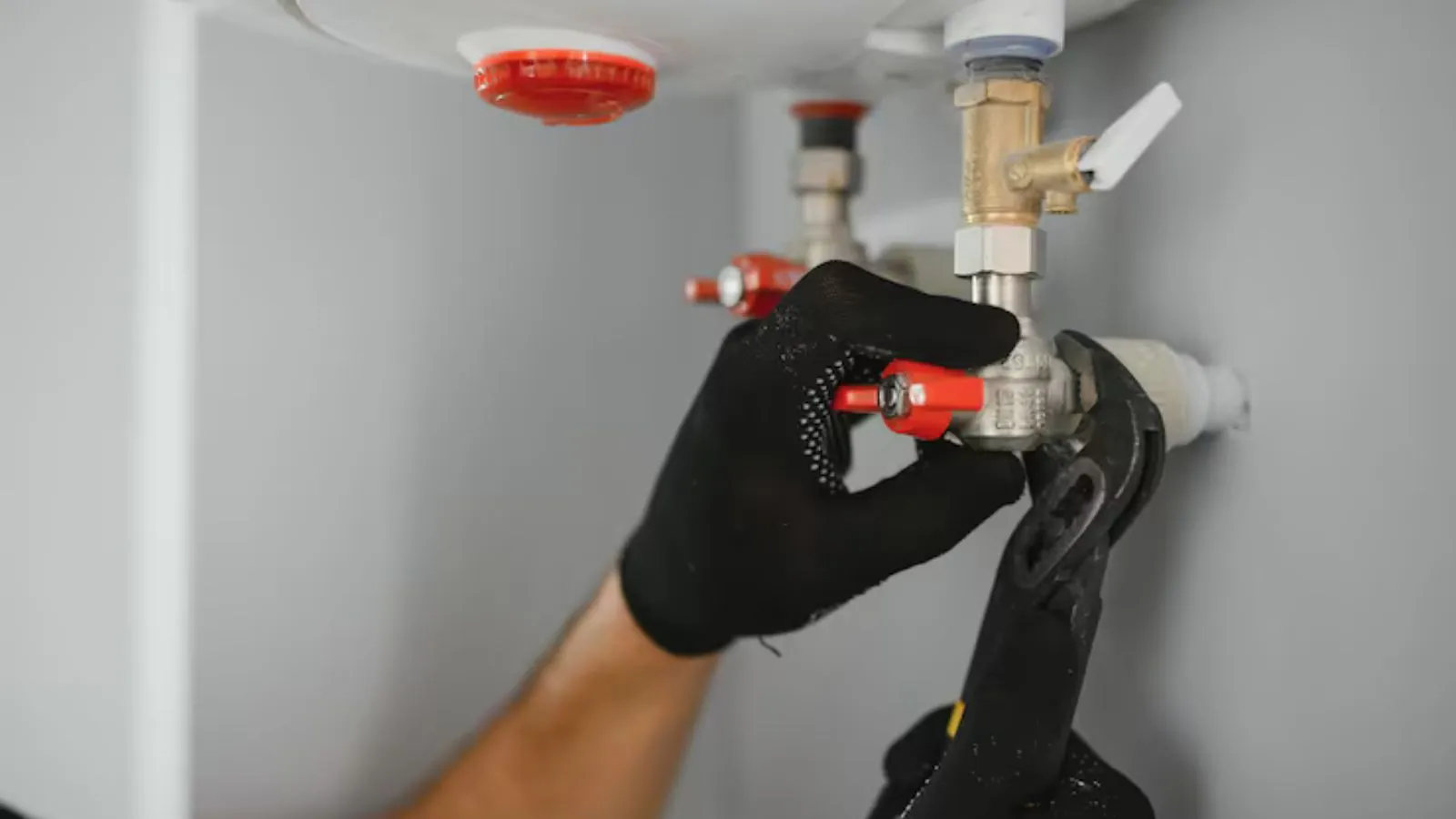
A house running its own water for a week is a risk. Pipes, hoses and appliances keep working, and if one fails nobody is there to stop it. A small leak left for days becomes a very large job. Prevention costs little by comparison.
The pre-trip checklist
Shut off the main.
For longer trips, close the main water valve. It removes pressure from every line.
Turn off appliance valves.
Close the washing machine hot and cold supply valves and consider the dishwasher valve.
Check the water heater.
Set it to vacation mode or lower the temperature if you will be gone for long.
Set the heat in winter.
Leave the heat on at a safe temperature so pipes do not freeze.
Check hoses.
Look at washer, toilet and sink supply hoses for bulges, cracks and rust.
Ask someone to check.
Have a neighbor or friend walk through every few days.
None of these steps is difficult. The main shut-off is the one that matters most, so find it before you need it. Everyone in the household should know where it is.
Seasonal risks
| Season. | Main risk. | What to do. |
|---|---|---|
| Winter. | Pipes freeze and split, then flood when they thaw. | Keep heat on, open cabinet doors on exterior walls, disconnect outdoor hoses. |
| Spring and summer storms. | Sump pump failure, roof leaks, runoff. | Test the sump pump, clean gutters, add a battery backup. |
| Summer. | AC condensate overflow. | Have the drain line cleared, add a float switch. |
| Year-round. | Hose and appliance failures. | Replace rubber hoses with braided lines, close valves. |
Our frozen pipe page explains what happens at the thaw, and the AC leak page covers the summer risk.
Leak sensors and smart shut-offs
- Battery sensors under sinks, behind toilets, by the water heater and behind the washer.
- A sensor near the sump pit that warns when water rises.
- Smart shut-off valves that close the main when a sensor trips.
- Alerts that go to your phone, so you learn of a leak while still away.
- Routine battery changes.
A sensor that tells you, and a neighbor who can act, turns a major loss into a small one. Check that the person with the key knows where the main valve is.
Cold and storms around Catonsville
The Maryland Manual reports that the freeze-free period in Maryland averages 185 days and that the statewide winter average is 34.1 degrees. We do not have a Catonsville-only count, and the figures cover the whole state. Pipes in exterior walls, garages and crawl spaces are the ones to watch when a cold spell arrives.
For storms, the National Weather Service reported that on May 27, 2018 about 6 inches of rain had fallen in the Oella and Catonsville areas by 5:15 pm. A sump pump on house current stops in an outage, so a battery backup matters when you are not home.
Source type: Maryland Manual On-Line, National Weather Service storm summary.
Before a long trip: a room-by-room walk
Spend ten minutes walking the house the day before you leave. Kitchen: look under the sink and behind the dishwasher for dampness. Laundry: check both washer hoses and make sure the drain hose is seated. Bathrooms: look at the toilet supply line and the base of each toilet. Basement: check the water heater, the sump pit and any floor drain.
Take a photo of each shut-off valve and the meter reading. If something happens, those photos help the neighbor who comes in, and they document the state of the house for your insurer. Write the plumber's number and ours on a card by the door.
Do not forget the outside. Disconnect and drain garden hoses in cold weather, since a hose left connected can freeze and split the faucet line inside the wall. Clear gutters and downspouts before a trip in the fall so rain does not pool against the foundation.
What to do if you come home to water
Stay safe.
If water is near outlets or the panel, do not step in. Call the utility or 911 if needed.
Close the main.
Shut off the water supply if you can do it safely.
Photograph first.
Capture the water and damage for your insurer.
A note on insurance while away
Some policies have conditions for vacant or unoccupied homes, including heat requirements. The Maryland Insurance Administration says coverage depends on the policy, so read yours before a long absence and ask your insurer what is expected. Document your precautions with photos of the shut-offs and sensors.
Wherever your house is, the steps are similar. Howard County residents will find local details on the Ellicott City page.
Neighbors who watch a house while you travel should know which county's offices apply. See the pages for Elkridge and Baltimore if your second address is there.
Insurers and the ANSI/IICRC S500 standard both stress speed. A leak found within a day is far easier to dry than one found after a week, which is the whole case for sensors and a neighbor with a key.
Home to a flooded house?
Close the main and call the 24/7 line.
Catonsville away-from-home questions
It is a low-cost step. For longer trips, closing the main removes pressure and most of the risk.
In winter it risks frozen pipes. Keep the heat at a safe temperature.
They add a layer of protection if you travel often. They need power and a connection, so test them.
Give them the main shut-off location and our number in advance so they can act quickly.