
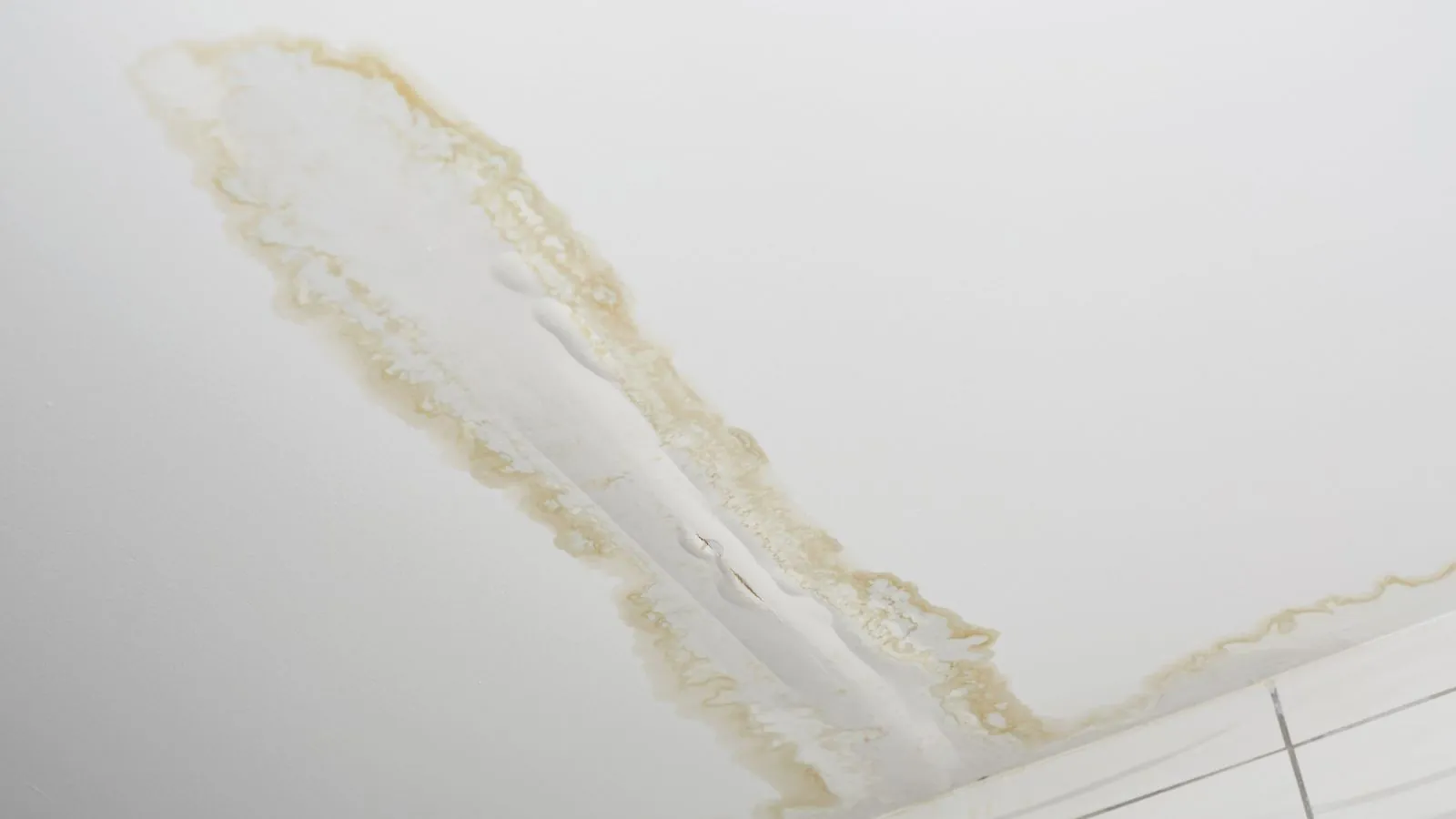
The question usually comes up after a discovery. A brown stain on a ceiling, a soft spot in a floor or a damp smell in the basement turns up, and you wonder whether it just happened or has been going on for months. The answer affects the repair, whether it is still leaking and how an insurer sees it.
Signs of new, active water damage
- Wet or cool to the touch, with a meter reading above normal.
- Water still dripping, spreading or reappearing after you wipe it.
- Paint bubbling that is soft and may release liquid.
- A single, clean-edged stain with no rings.
- Fresh odor of damp, not yet of rot or mold.
These point to a leak that is still running or was running recently. Treat these as urgent, because moisture travels and soaks deeper each day.
Signs of old or long-term damage
| Sign. | What it suggests. | What to do. |
|---|---|---|
| Multiple rings or layered brown stains. | Repeated wetting and drying over time. | Find the source, confirm it is dry, then repair. |
| Dry, crumbly drywall or plaster. | Water long gone but damage remains. | Cut out and replace the damaged area. |
| Soft or rotted wood framing. | Long exposure to moisture. | Have a contractor assess structural repair. |
| Black or green growth on surfaces. | Extended moisture. | Fix the water source and have it assessed. |
| Persistent musty odor with dry readings. | Old moisture trapped in materials. | Dry the space and check for hidden growth. |
Old damage can still be active. A leak that runs for a few minutes each time you flush a toilet looks old and is actually ongoing. Always measure.
Why a moisture meter beats your eyes
Color and shape lie. A stain can look huge and dry, and a small mark can sit on a soaked wall. A pin or pinless moisture meter compares the wall to a known dry material. A thermal camera shows cool areas where water remains. Together they tell you where the water is now, which is what matters for a repair.
A technician can also see whether the area dries or rewets across visits. Dry readings today and wet readings after the next shower mean a leak that comes and goes. Our structural drying page explains the meters and the readings.
What old damage means for repair
Confirm the source is fixed.
A plumber or roofer fixes the cause first. Otherwise the repair gets wet again.
Open and inspect.
A small cut or removed trim shows the condition of framing and insulation behind the stain.
Remove damaged materials.
Rotted wood, crumbled drywall and moldy insulation are cut out.
Dry and rebuild.
Remaining materials are dried and verified, then replaced and finished.
For a stained ceiling, see ceiling repair. For a wall, see wall and drywall repair.
Old houses, old stains
Old Catonsville was listed on the National Register of Historic Places on December 27, 2002 and holds buildings from 1866 to 1950. Central Catonsville and Summit Park, listed on December 27, 2006, covers 1869 to 1958 and about 400 resources. Winters Lane, listed on December 21, 2007, covers 1867 to 1945 and 155 properties.
Houses that have stood for a century or more have often been through several leaks. A stain you inherit with a purchase may have a history, and a home inspection that includes moisture readings can separate old damage from new. Mention the age of the house to any restoration company you call.
Source type: National Register nomination records via Maryland Historical Trust and National Park Service.
Why the age of the damage matters to insurers
The Maryland Insurance Administration says a suddenly burst pipe that floods floors is generally covered for the resulting water damage, while foundation seepage is treated as a maintenance issue. Gradual damage may be treated differently from sudden damage. Neither of us can tell your insurer's view, so ask. Keep photos with dates if you find damage, even old damage.
If you are buying or selling, note that old damage is a disclosure and inspection matter, not just a repair one. Ask your agent and attorney what applies to your sale.
What to do next
Photograph the area, mark its edges with a pencil and date it. Check it again in a few days. If it grows, call. If you are unsure, call anyway, since a reading takes a few minutes. Howard County addresses follow different permit rules, so see the Ellicott City page.
Houses of every age show up in our calls from Elkridge and Baltimore, where rowhouses and townhouses share walls and make it harder to tell whose leak is whose.
The ANSI/IICRC S500 standard treats moisture readings as the evidence of current wetness. That is why a meter, not color or shape, tells you whether damage is old or active.
Found a stain you cannot place?
Call the 24/7 line. A reading shows if it is still wet.
Catonsville old-damage questions
Not reliably. Rings suggest repeated wetting, but only a meter shows whether the area is wet now.
It can. Older houses may have plaster, original plumbing and cellars, all of which affect how damage looks and how it is repaired.
If the area is dry, a stain is cosmetic and can be primed and painted. If readings are wet, find the source first.
Gradual damage is often treated differently from sudden damage. Read your policy and ask your insurer.